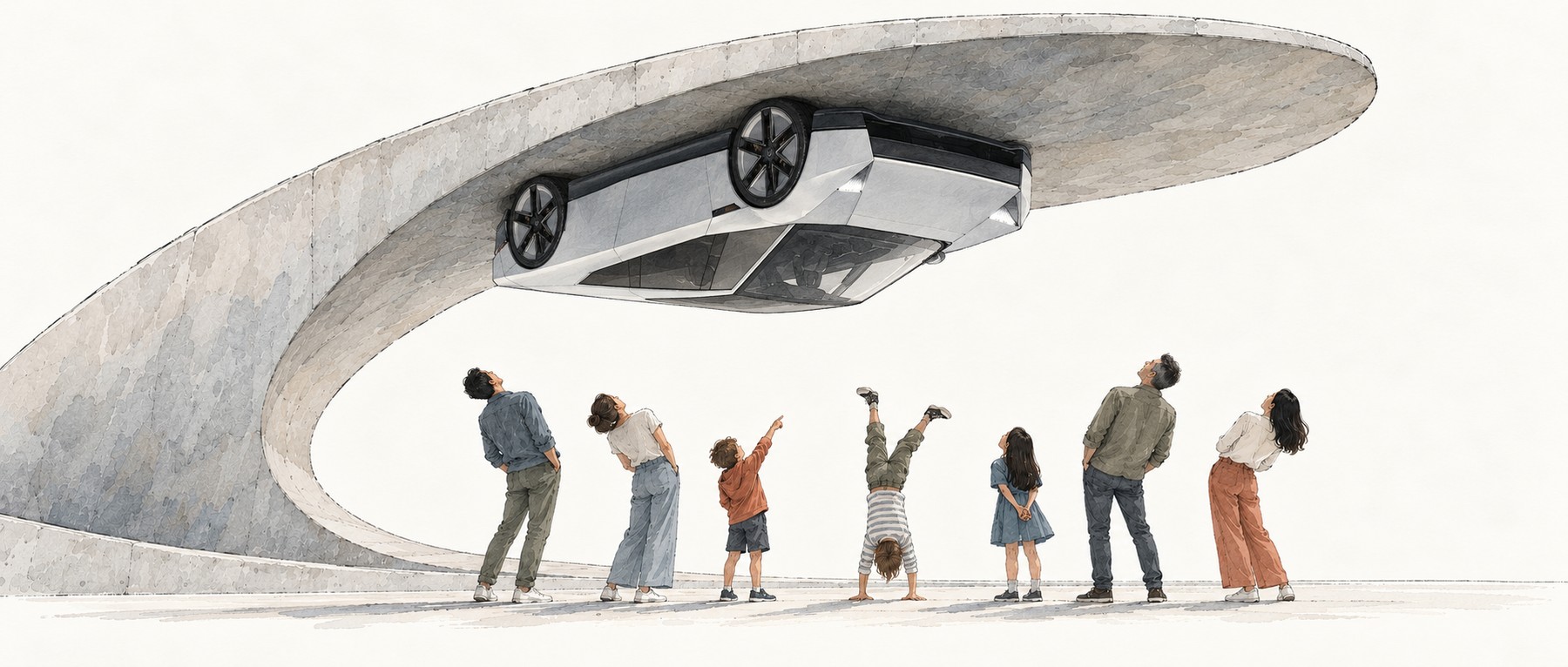
Now that the noise has died down, let’s talk about the Roadster. We haven’t seen a product provoke this kind of reaction in years. Nobody watched it and thought, “Nicely done.” People just stared.
Once the shock wore off, something else began to bother me. Beside this car, all our talk about design methods, user needs, and use cases suddenly felt inadequate. The theories we’ve spent years refining looked a little fusty parked next to it.
I think this car shows us where design ends up.
Nobody cares whether it’s pretty
The first clue was what people weren’t discussing after the launch: the way the car looks.
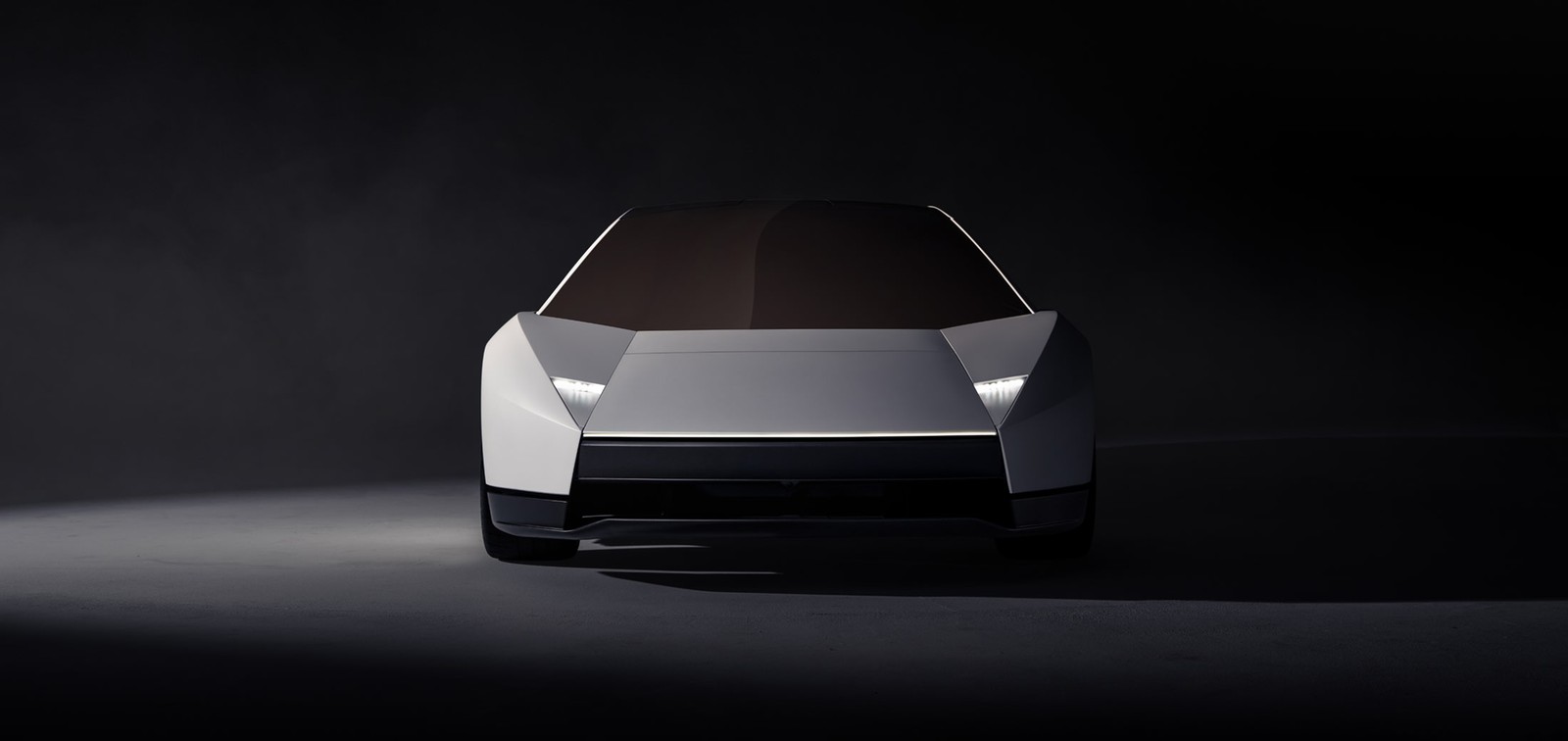
That’s unusual. Launch a new car and the argument is almost always about whether it’s ugly. A few people thought this one looked too much like a Lamborghini. Hardly anyone cared. The things that stopped people cold were a car hanging upside down and a car taking flight.
When people argue furiously about whether a product looks good, it’s often because there’s nothing else left to argue about.
When Ferrari unveiled its first electric car, the Luce, in May, almost all the conversation was about its appearance. Was it ugly? Did it look like a Ferrari? But the problem wasn’t the styling. Ferrari had stopped chasing the limits. Here was a carefully optimized, expensive electric car. With little to say about the product itself, people were left discussing its shell.
The Roadster reverses that relationship. It can do so much that its appearance gets a free pass. Proportions we’d ordinarily dislike, details we’d accuse another car of copying: here, the response is “So what?” It’s the same force people once called Steve Jobs’s reality distortion field. A sufficiently extraordinary product changes how we see things. Taste is no exception.
First principles make the styling disappear
A sports car has two particularly hard jobs: staying planted and accelerating. What we actually want is downforce and thrust.
For decades, the industry has taken an elaborate route to both. Engineers use increasingly complex technology and manufacturing to extract the last little bit of grip and acceleration. The route itself has become so familiar that hardly anyone questions it. Want downforce? Refine the wing, the diffuser, the underbody channels. Shape the airflow so that speed presses the car into the road. Want acceleration? Increase engine power. Switch to electric motors. Then work harder on the tires. Each generation models the air more precisely and builds more intricate machinery.
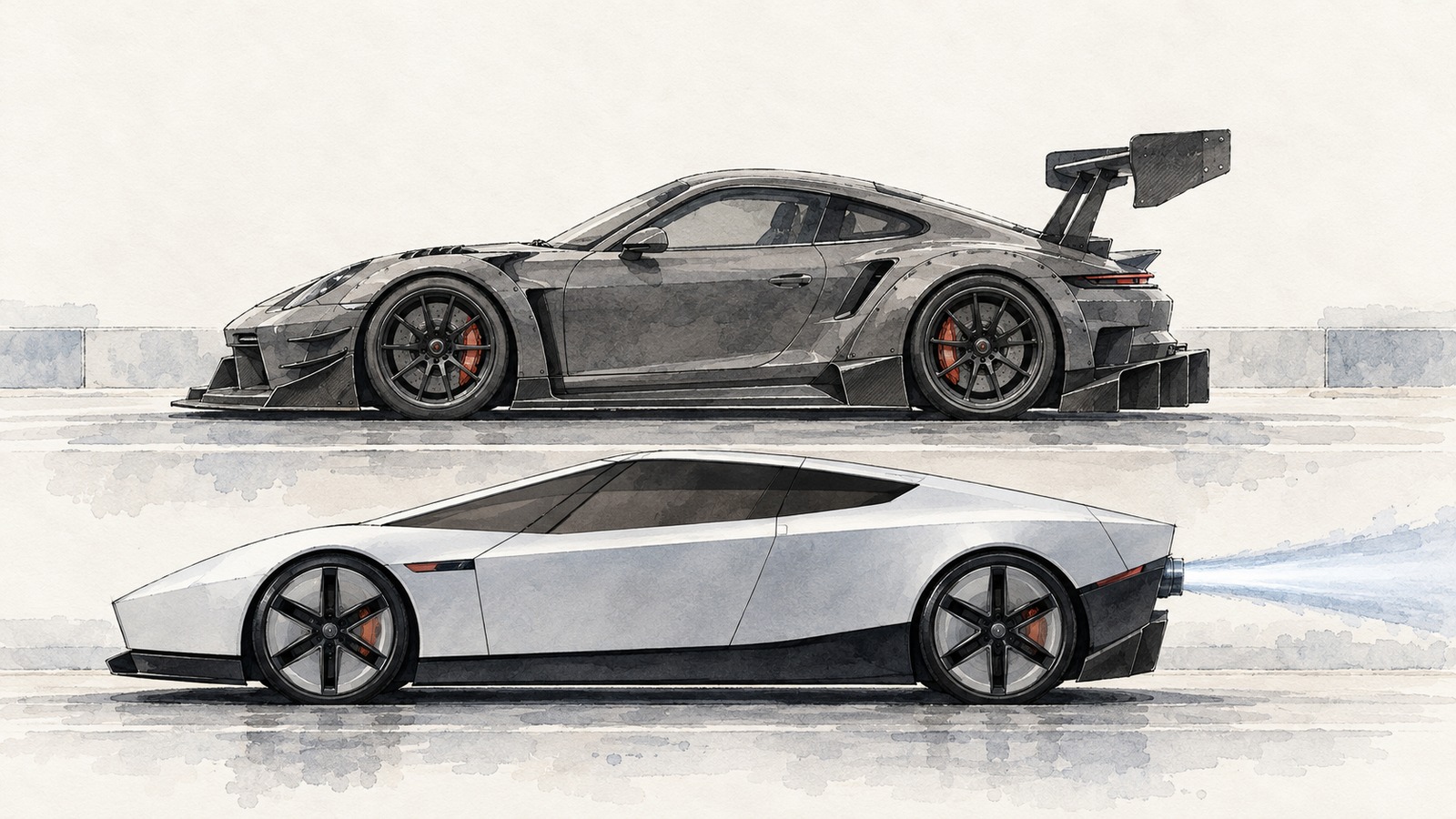
The Roadster’s answer is almost offensively simple. Need downforce? Generate it directly. Need thrust? Generate that directly too. That’s thinking from first principles: start with the physics and go straight for the force you need.
Fans beneath the car extract air, pinning it to the surface even at a standstill. The suction holds it there upside down. Cold-gas thrusters at the rear provide four to five times the propulsive force available through the tires, taking it from zero to sixty miles an hour in under a second.
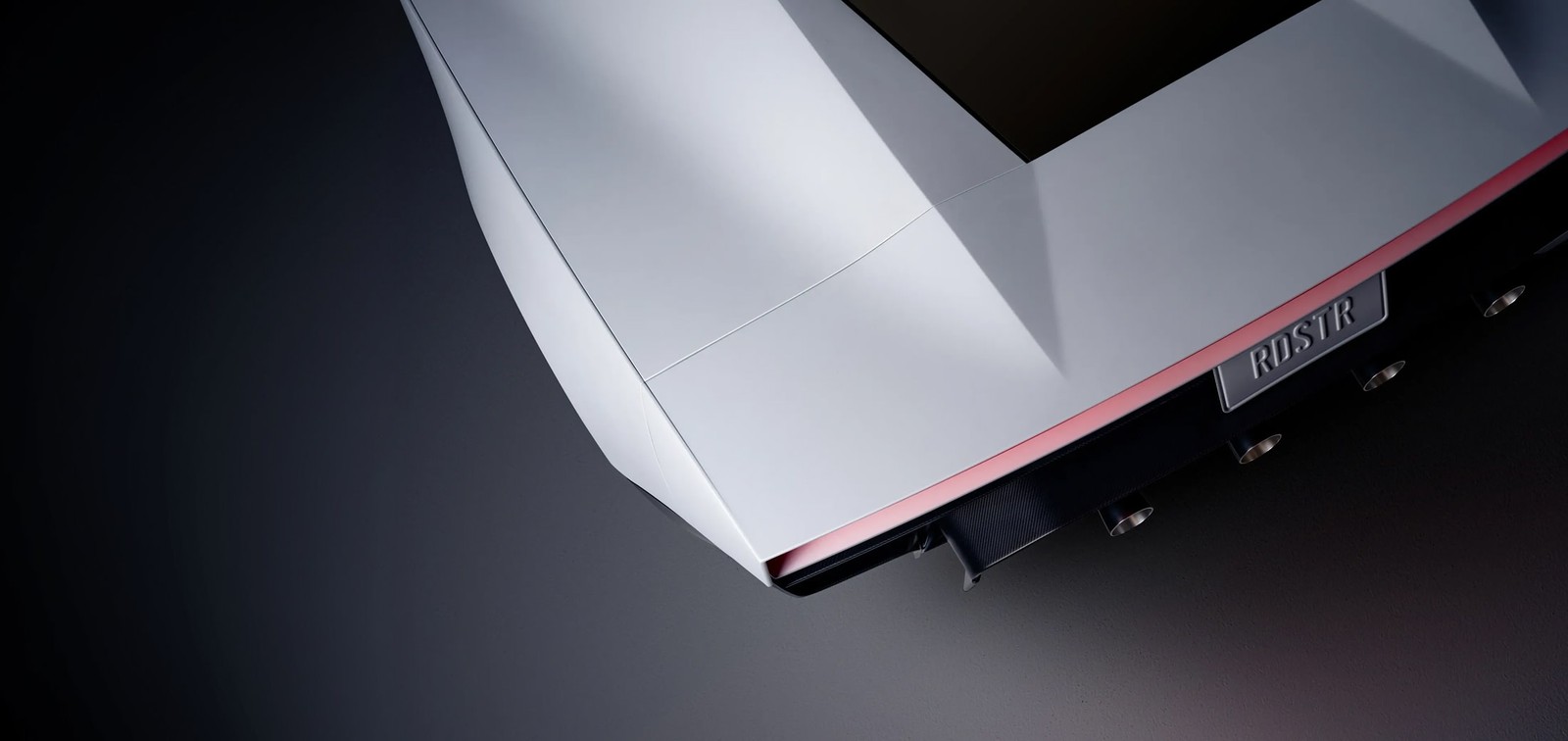
It bypasses the established engineering route altogether. Generations of exquisitely shaped wings and underbody passages lose their luster beside a fan. Conventional manufacturers can keep improving their approach, but they remain trapped by its limits. The Roadster makes those improvements feel beside the point.
And engineering isn’t the only thing it overturns. For decades, a towering rear wing has been almost shorthand for the beauty of a sports car. Then a smooth-bodied car generates its own downforce and hangs upside down beneath a ramp. Nobody misses the wing. What the technology can do starts deciding what looks right. The car doesn’t need a shape that persuades us. Its overwhelming capability rewrites our idea of what a sports car should look like.
That’s the endpoint I see here. All the design work along the old route becomes obsolete. What remains is one decision: suck the car onto the road and fire gas out the back. That decision is design in its purest form.
The greatest beauty doesn’t come from a stylist
We’ve seen this kind of beauty before. We just rarely find it in consumer products.
Consider a tokamak fusion reactor. I can’t imagine an industrial stylist ever had a say in its appearance. The coils, pipes, and vacuum chamber sit where they do because physics demands it. Yet stand in front of one and you’re awestruck. A rocket engine has the same effect. None of that dense plumbing or the enormous nozzle is there to look attractive. Still, it hits harder than most things painstakingly designed to be beautiful.
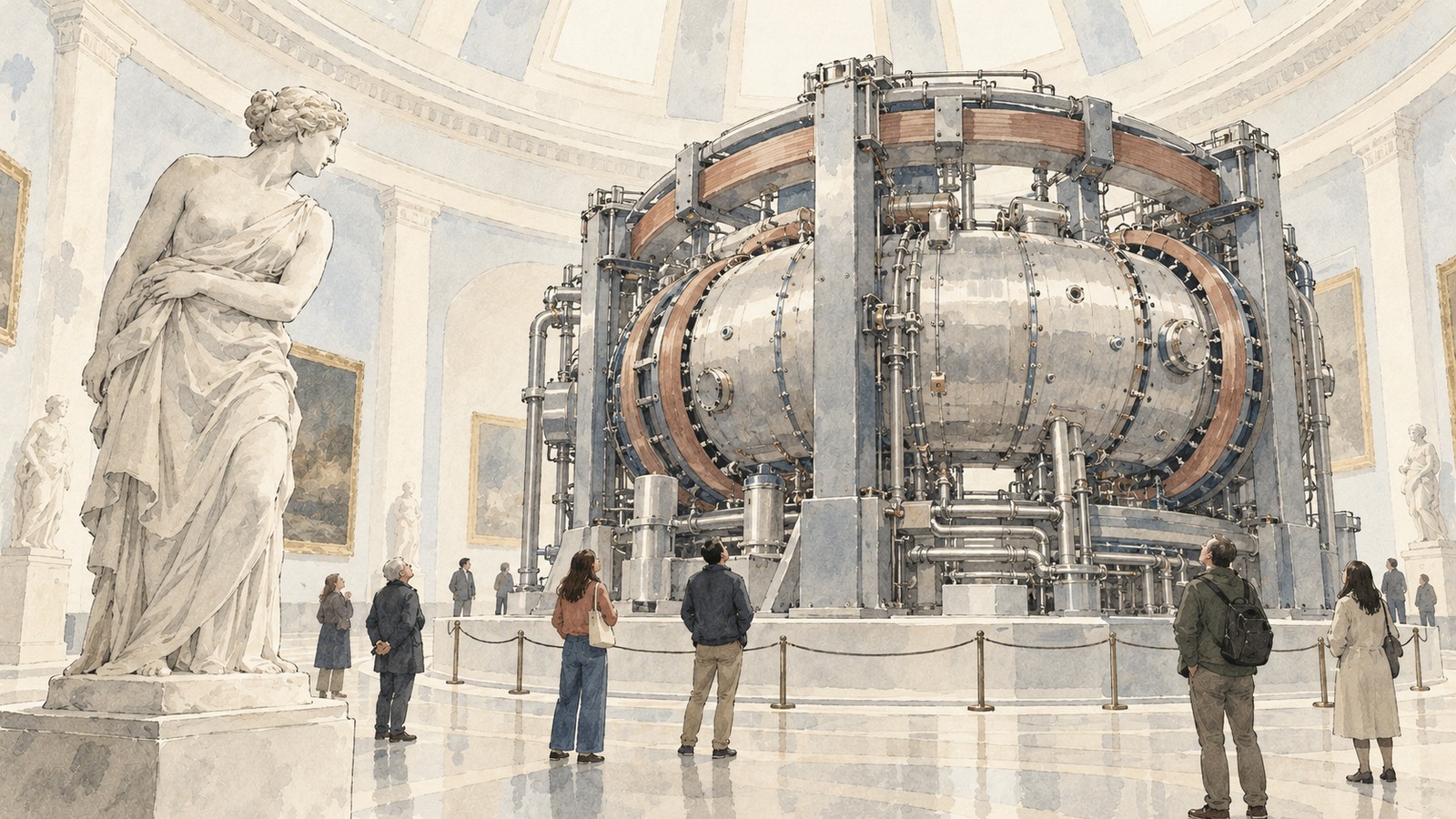
Here, the machinery forces our taste to change. It overturns our expectations of beauty instead of accommodating them.
The Roadster has that same force. Musk’s engineering aesthetic is powerful enough to make everyone else reconsider theirs.
A tokamak looks the way it does because physics requires it. The Roadster astonishes us because someone made the right fundamental decision first. Get that decision right, and the form can follow the engineering. It will look right because it is right.
Its users live in the future
The comment I saw most often after the launch was: What’s the use? Who needs this?
Our familiar design process has no answer. Who needs to hang upside down on a ramp in daily life? Whose commute involves flying over a row of cars? Nobody would request either feature in a user interview. Gather requirements, map out situations, iterate for as long as you like: you will never arrive at this car.
Design multiplies what a product can already do. Think of it as the zeros added after a number. You need something substantial in front of them. Research, requirements, use cases: we turn to that process when the product itself isn’t sufficiently compelling. We find a need, build a case, smooth things out a little at a time. When the underlying capability is this great, all those additions start to feel redundant. It doesn’t need to win anyone over. What it can do has already left everyone speechless.
So “What’s the use?” strikes me as a rather dull question. It judges the car against today’s needs, as though those needs should determine what a car can be. This car belongs to a different time.
Musk calls it the best of the last cars humans will need to drive themselves. Many people hear a good advertising line. I hear the key to understanding the whole project.
In that future, cars drive themselves. They become public infrastructure, like elevators or subways, taking people from A to B without anyone needing to take the wheel. If you still want to drive, you’ll do it for pleasure. And that pleasure will need to be something today’s cars can’t offer. A sports car that’s a little faster or more stable would be pointless in that world. One that hangs upside down, flies, reaches sixty in under a second, and tops out at Mach 0.5 offers a reason to drive.
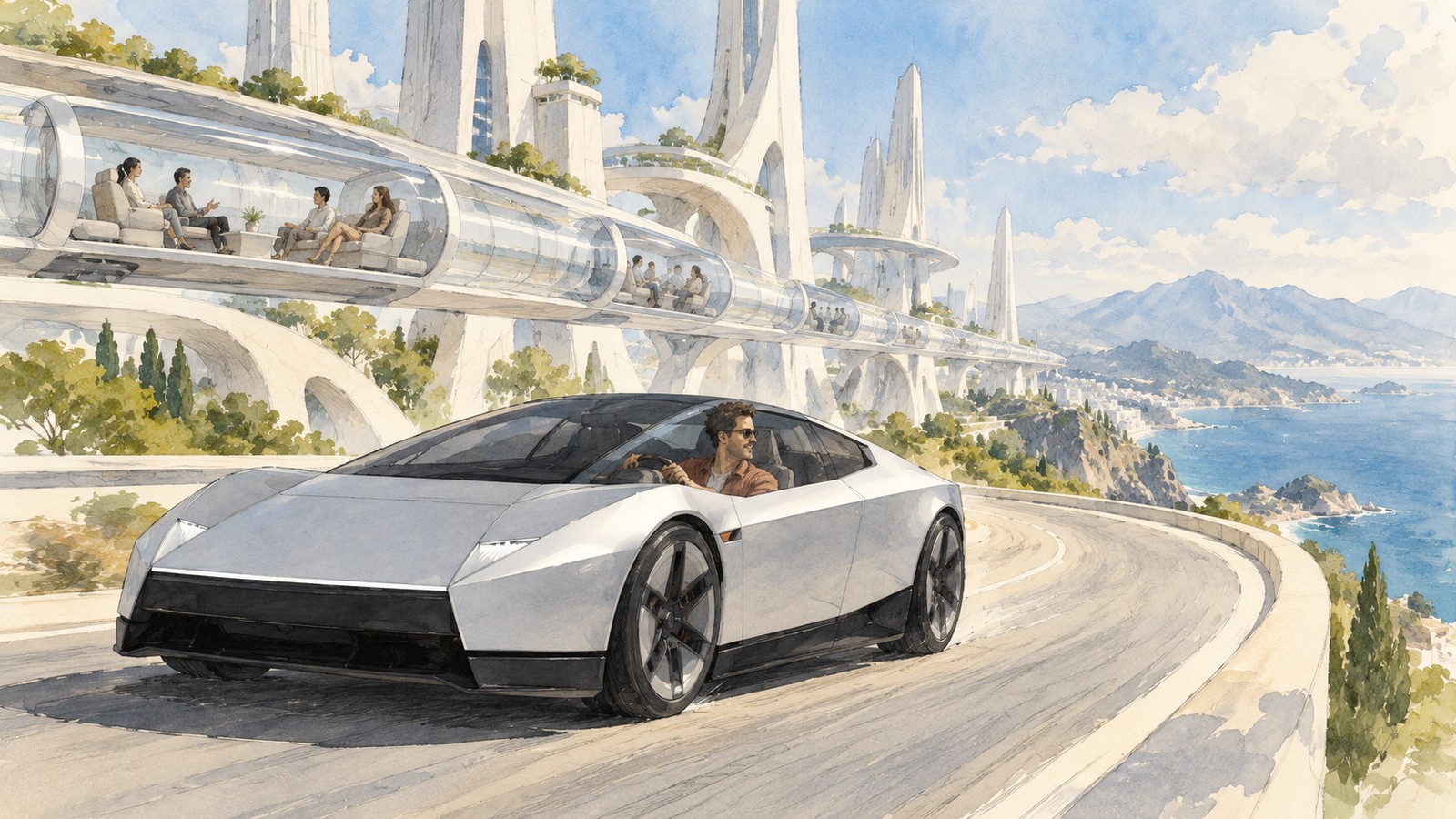
Cars didn’t make horses disappear. They freed horses from transport and left us with riding and racing. Nobody asks whether a racehorse can haul freight. A car you drive yourself will become a toy for your enjoyment. Getting from A to B won’t be its job. Whether it’s road legal will scarcely matter.
While everyone else works out how the next car can drive better on today’s roads, Musk is building the ultimate driving toy for a world that no longer needs drivers.
Who needs a car that can hang upside down? You won’t find that person in today’s user research. That person lives in the future.
The boy who never grew up
I find Musk fascinating. So many of his projects sound like a little boy’s daydreams: a flying car, a rocket that lands itself, his own car sent into space. Plenty of boys have imagined those things. Then they grow up and dismiss them as childish nonsense.
“Why don’t we just suck the car onto the ground?” That’s a child’s question. Adults know too much to ask it. Yet hidden in that question is the decision that unsettles an entire industry’s way of doing things.
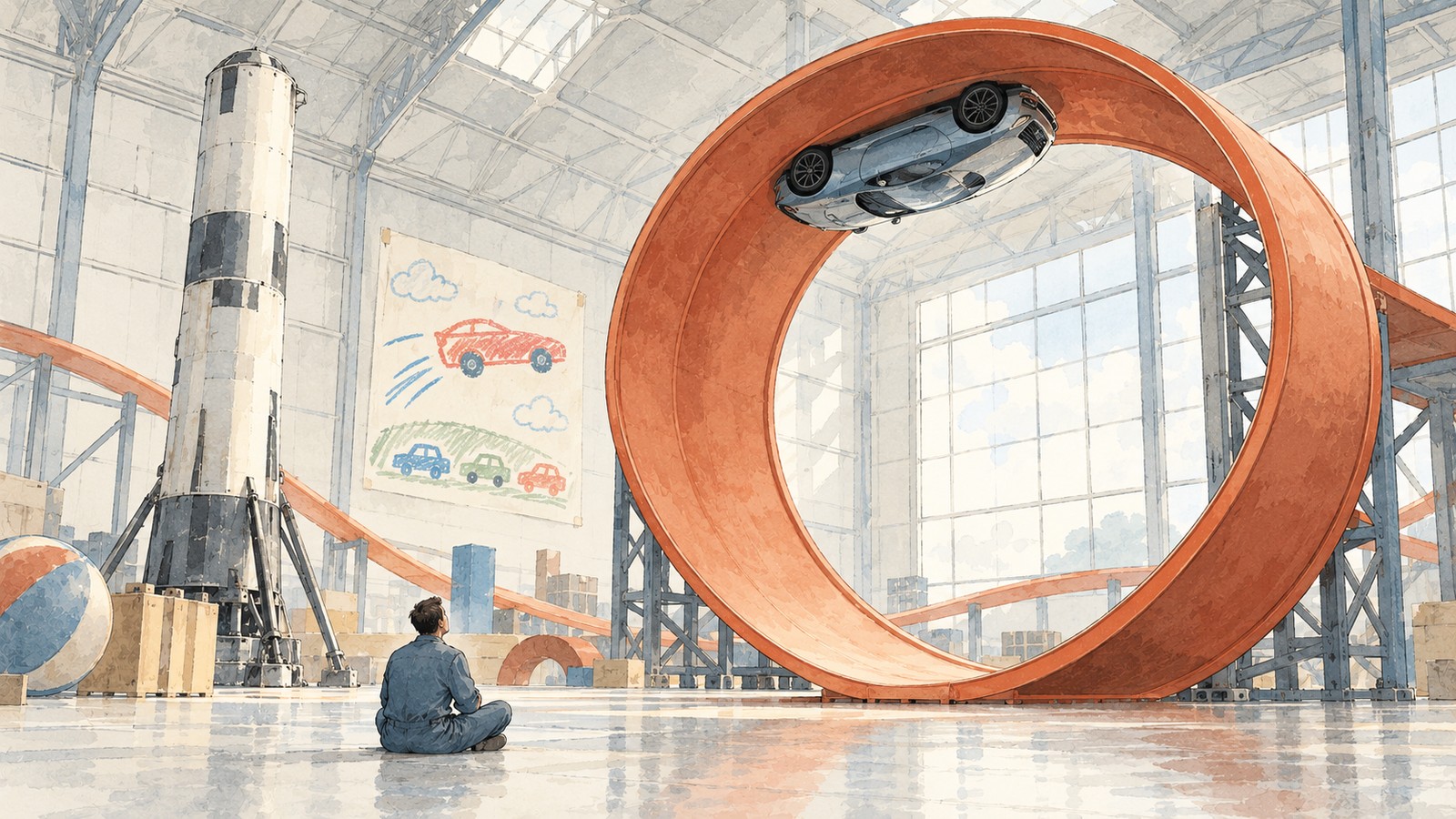
A child can ask, but a child can’t build it. Musk has kept asking questions that way all his life, then turned those childhood fantasies into working machines, one by one. An automotive engineer looks at a car and asks how to squeeze a little more performance from the motor and tires. Musk asks a child’s question and overturns the whole approach.
And this is only the first time two of his companies have fitted together quite like this. When Tesla, SpaceX, Neuralink, and X truly work as one, I think we’ll see the beginning of Musk’s empire.
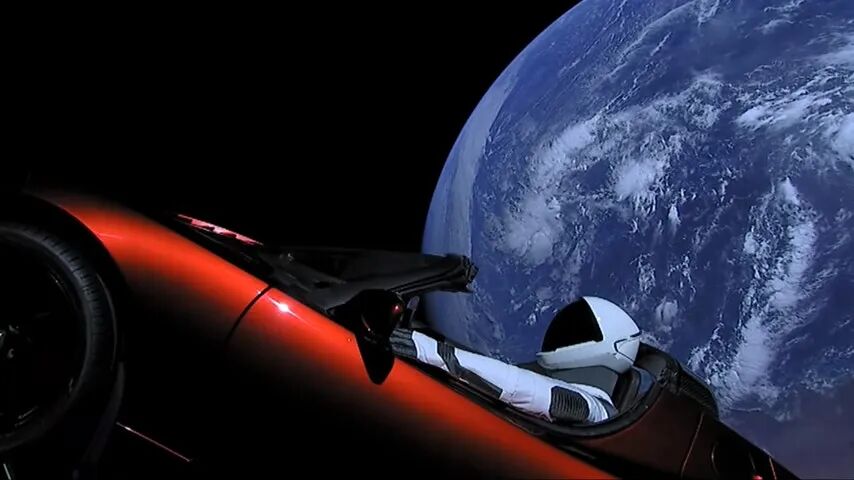
His creativity cuts through established ways of doing things to reach the essential problem. In February 2018, on its maiden flight, Falcon Heavy carried Musk’s own first-generation Roadster into space. A mannequin in a spacesuit sat in the driver’s seat. That Roadster needed a rocket to take it into the sky.
Eight years later, it took flight on its own.