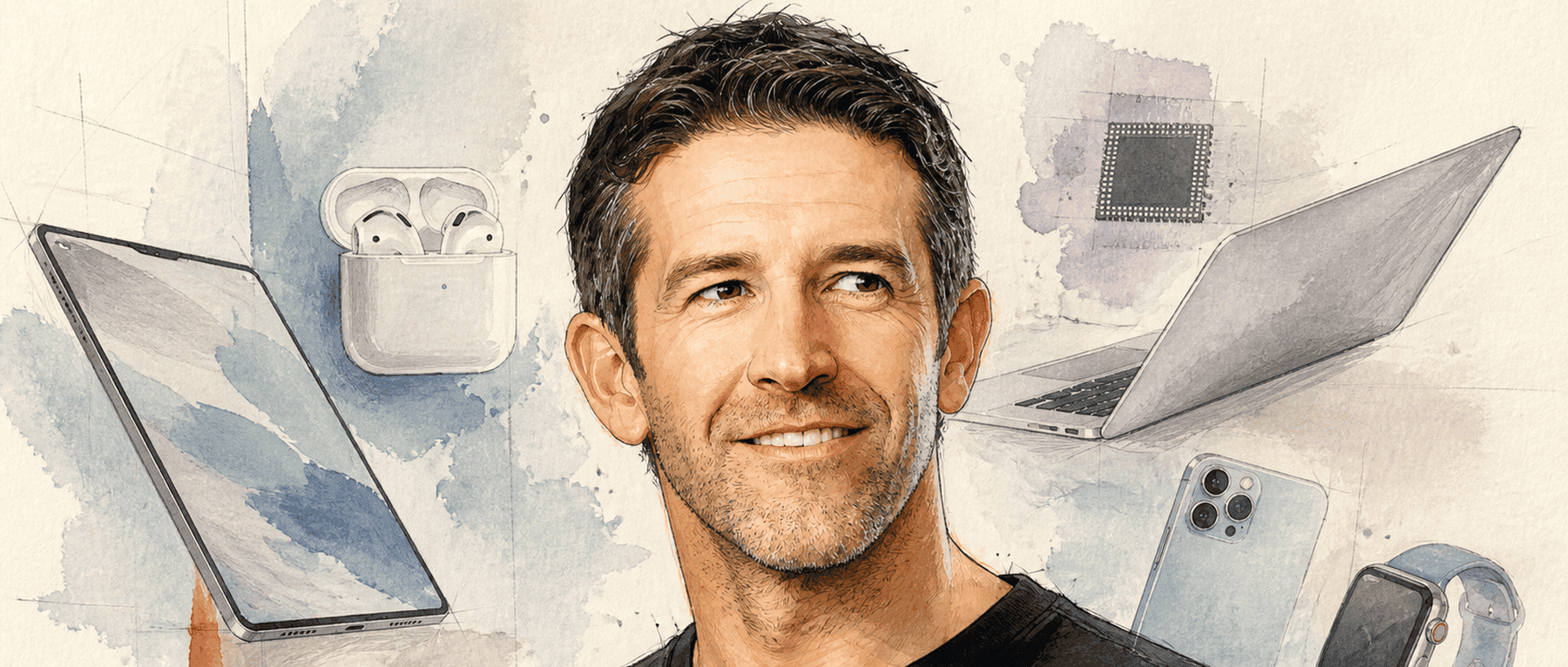
John Ternus is now Apple’s CEO.
For months, people have been studying his résumé for clues. He joined Apple in 2001. He has worked on the iPad, AirPods, Mac, and iPhone, with responsibility for everything from materials and manufacturing to product reliability. Surely, somewhere in that list, we can find the future of Apple.
I think the more revealing moment will happen in a conference room.
Designers, hardware engineers, and chip teams will arrive with several proposals. Each will be defensible. Each will have evidence behind it. Then someone will have to say, “We’re doing this one.”
That person will define Apple’s design.
Apple Has Split the Design Decision in Two
On the day Apple announced the CEO handover, it made another appointment. Chip chief Johny Srouji became chief hardware officer, putting both hardware engineering and hardware technologies under him.
A month later, Bloomberg reported another hardware reorganization. Oversight of product design was redistributed. Some product leaders who had reported to the new CEO would now report directly to Srouji. Apple’s stated aim was to speed up product development by bringing the chip and product teams closer together.
The easy story is that the engineers won and the designers lost.
Apple’s structure is less tidy than that. Product design still turns concepts into manufacturable objects. Human Interface Design, led by Steve Lemay, still reports directly to the CEO. Ternus is no tourist in a design studio either. He began his Apple career on the product design team.
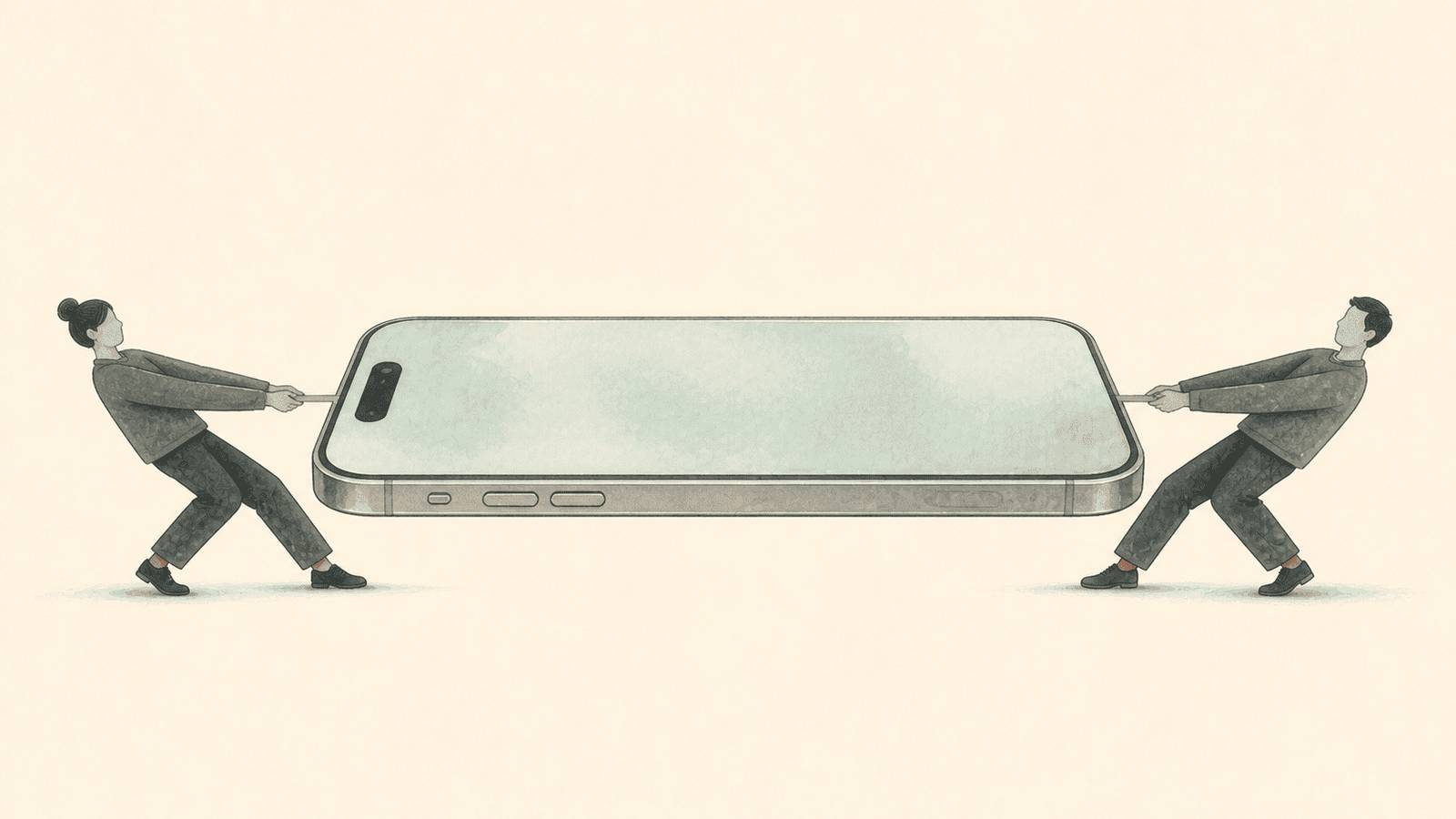
Design authority has not simply moved from designers to engineers. It has been divided.
Srouji controls how the hardware gets made. Ternus remains the final judge of the interface and user experience. The management structure that once held hardware and software design together now has a seam running through it.
That seam is where things get interesting.
Whoever Chooses the Goal Chooses What Looks Right
Designers enjoy talking about beauty as if it exists on its own. It does not. Without a goal, “beautiful” has no useful meaning.
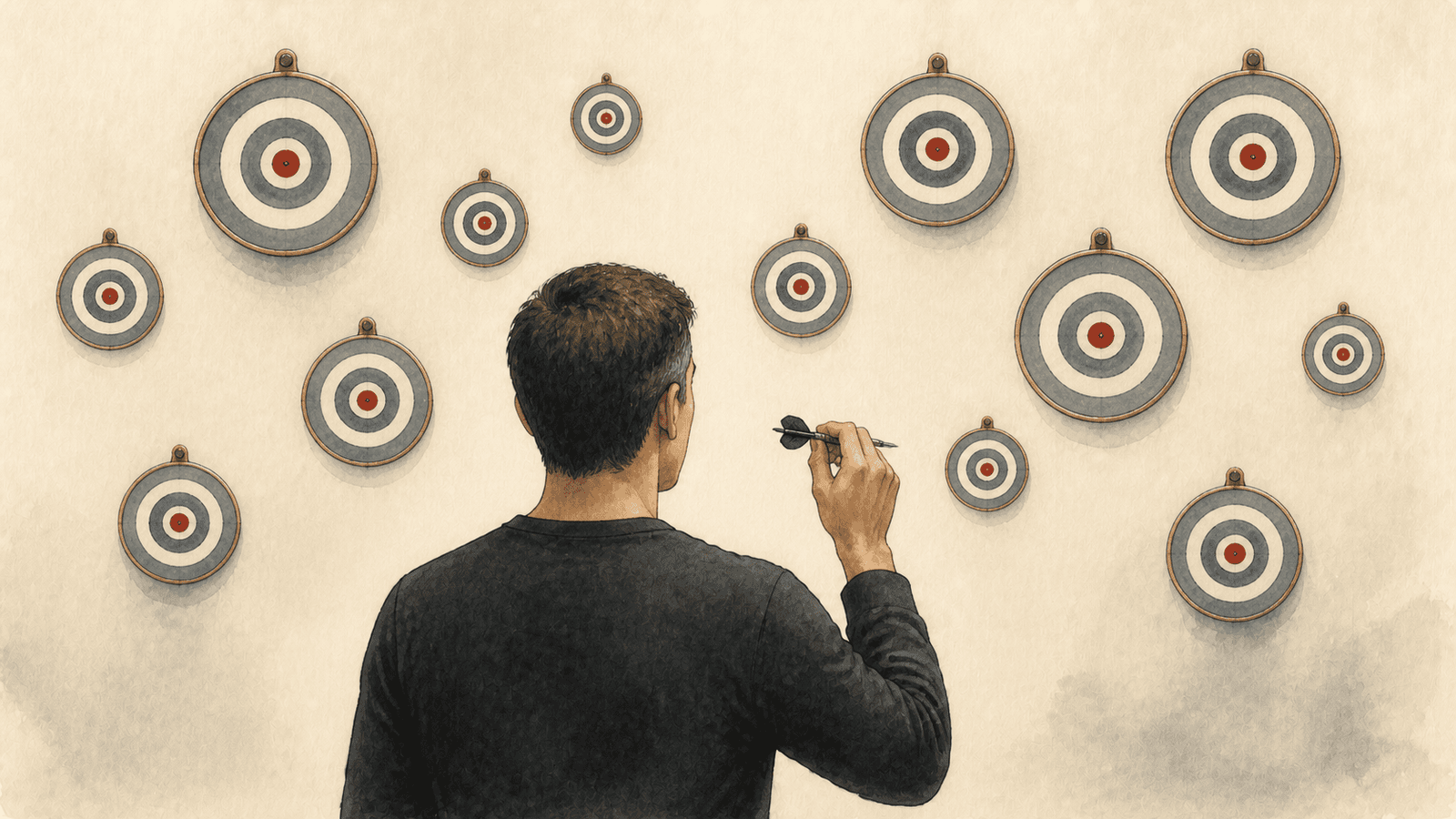
Take the same phone. If the goal is two more hours of battery life, a slightly thicker body may be the better design. If the goal is to make the phone feel like a single sheet of glass, the same thickness becomes a failure. Both teams can bring data. Both can claim to be defending the user. The result depends on which problem the company places at the center of the table.
Whoever chooses the goal gets to define beauty.
Start with what a new chip makes possible, and the product will take shape around heat, battery capacity, and performance. Start with how the product should feel in a customer’s hand, and engineering receives a different assignment.
Neither starting point is morally superior. Engineers make wonderful products. Designers make terrible calls. The powerful person is not the one with “design” or “engineering” on the business card. It is the one who decides which problem everyone else must solve first.
So what kind of goal will Apple put first under Ternus?
Metrics Can Prevent Failure. They Cannot Choose the Future
Most people read an organization chart as office politics: who rose, who fell, who now reports to whom. A designer should ask a different question. Which kind of problem will now reach the decision-makers first?
Srouji’s organization is exceptionally good at turning complicated technology into products that can be manufactured by the million without falling apart. Speed, power draw, yield, durability: all of these can be measured.
That way of working has one great virtue. It does not indulge imaginary goals for long. If the chip cannot do it, it cannot do it. If the battery will not fit, it will not fit. I expect Apple’s products to remain almost boringly dependable, improving a little each year.
But metrics have a hard limit. They can eliminate obvious mistakes and give a huge company an enviably high floor. They cannot produce imagination. They cannot tell you which goal is worth chasing, or which product will make people want one before they can quite explain why.
This is not an engineer problem. Designers become conservative under the same incentives. Put avoiding complaints, avoiding mistakes, and shipping on schedule ahead of everything else, and every discipline will quickly learn to serve those goals.
Jobs Left More Than an Office
Apple’s rarest asset was never just Jony Ive’s taste, or Steve Jobs’s willingness to obsess over the radius of a corner.
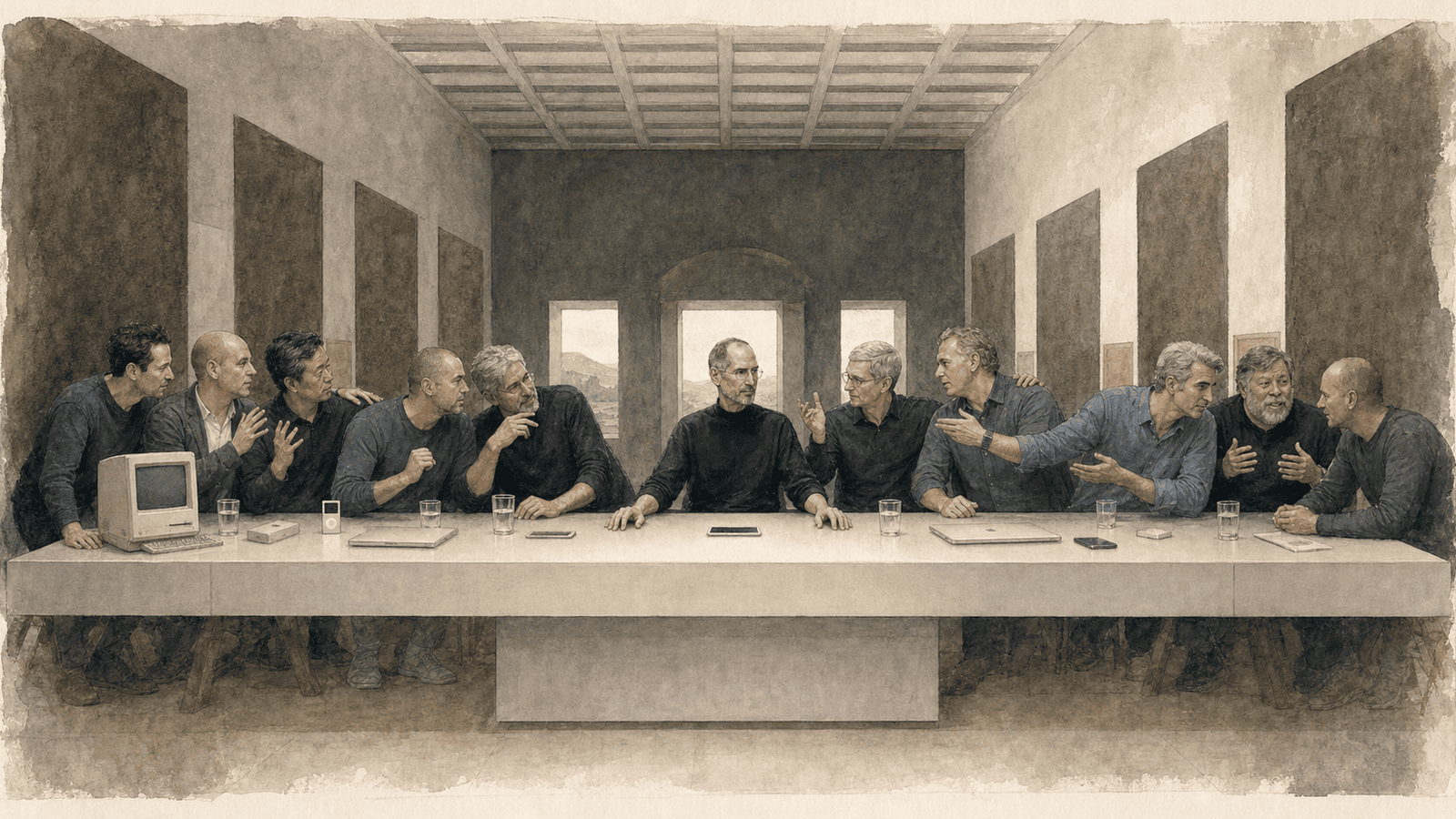
The value of Jobs’s micromanagement was not that he necessarily understood every curve better than the designer drawing it. His decision outranked everyone else’s. Hardware, software, engineering, and operations could argue for months. Eventually, the whole company converged on one answer.
That is why Apple’s products looked as though one person had made them.
Of course, “one person” is not literal. Thousands of designers and engineers did the work. It means that when several disciplines brought different answers, each correct on its own terms, the company could still choose one and make everyone else accept the cost of that choice.
This is the capacity large companies lose first. Their processes become thorough. Every department gains deeper expertise. Every risk gets an owner. Then nobody can answer the simplest question: what exactly are we trying to make?
The real inheritance Ternus receives is not Cook’s office. It is the right to make the final call.
His background in product design and hardware engineering may help him understand manufacturing better than a pure design leader, and product better than a pure engineering leader. But a résumé tells us only which languages he can understand. It cannot answer the question that matters:
When two answers are both correct, which one will he sacrifice first?
Liquid Glass Is His First Test
I have written before that iOS 26’s Liquid Glass is far more ambitious than its critics give it credit for. It has plenty of problems. But it did something Apple used to do very well: it decided where interfaces should go next before everyone had agreed.
In that essay, I described it as something we would not see again. I was too quick.
Human Interface Design still reports directly to the CEO. Strong design judgment has not vanished from the organization chart. The test will come when readability studies, user complaints, adoption data, and internal engineering costs all land on Ternus’s desk.
He can tell the team to fix the failures while protecting the design language. Or he can retreat to the safest, most familiar answer.
Either decision can be presented as “listening to users.” Only the decision itself will tell us what Apple now considers good design.
Liquid Glass is not a relic of the old Apple. It is an unanswered question for the new one. We will find out whether Apple’s design still follows a clear point of view, or whether every measurable objection now gets an equal vote.
Apple Matters Because It Takes a Side
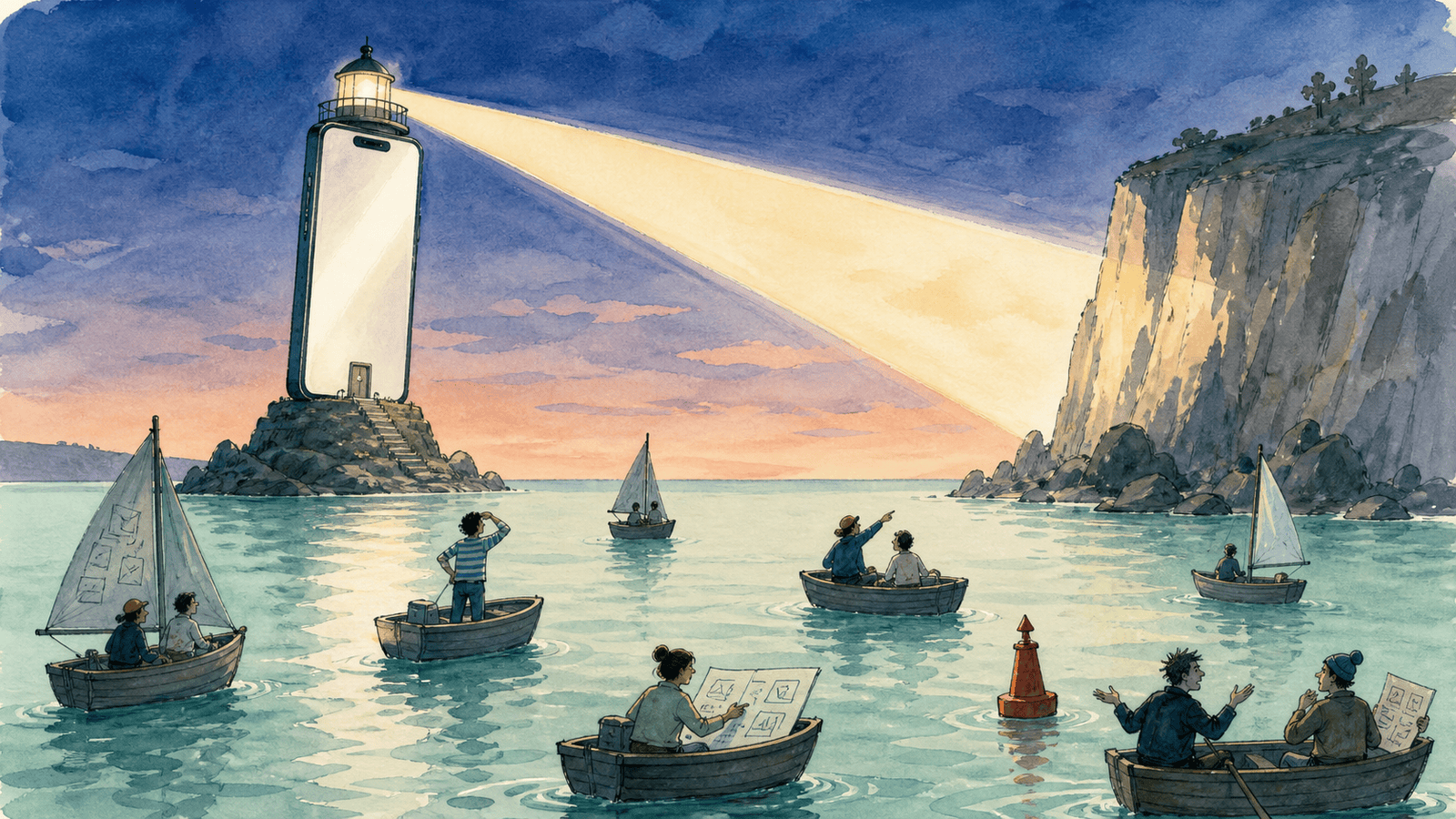
For more than twenty years, Apple has been the central reference point in consumer electronics. Nothing else comes close.
That is not because Apple is always right. The butterfly keyboard and Touch Bar settled that question. Apple has reversed plenty of its own design decisions. What it gave the industry was a complete answer, delivered with conviction. It would turn one possibility into a product and place it in front of everyone. Other companies could copy it, reject it, or find a way around it.
A clear answer gave the design industry something worth arguing about. That alone had enormous value.
If the next Apple concentrates on improving every measurable number, it may remain immensely successful. Its products may become more dependable, more durable, and more powerful. But it will be less likely to set the terms of the design conversation.
That role did not disappear on September 1, and it may not disappear at all. Cook remains on the board. Apple develops products over years. No device changes shape on the morning a CEO changes jobs.
We will see the difference when Ternus next faces two correct answers and has to choose between them.
When that happens, ignore the language of the keynote and the immaculate product photography. Watch which goal he puts first. Then watch which correct answer he makes give way.
That is when the next Apple begins.