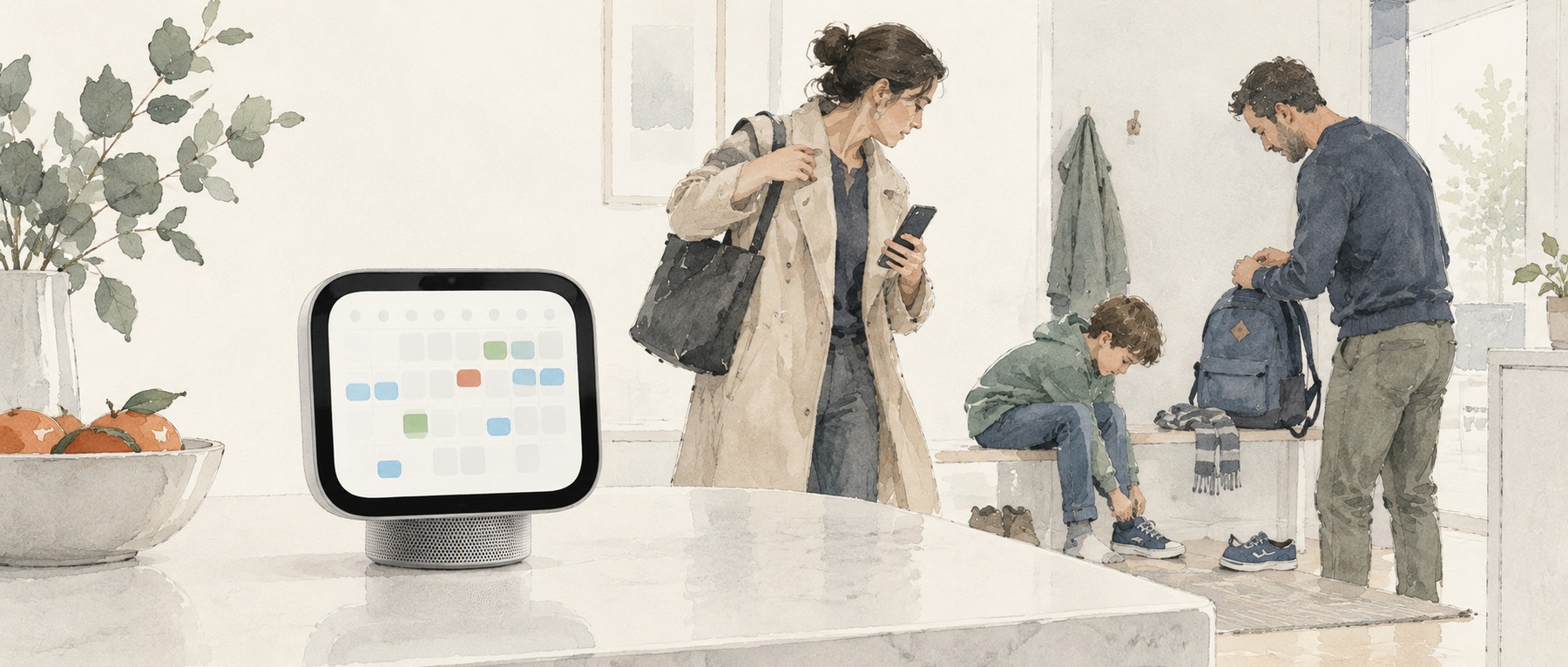
Yesterday, Apple unexpectedly announced HomeView: a seven-inch square screen on a hemispherical speaker base, priced at $299. It recognizes up to six family members and shows each person’s calendar, reminders, and widgets as they approach. Distance matters too. Across the room, you see a large clock and photos; up close, you get the details. Guests can play music and browse shared albums without seeing your private information.
An editor at tech publication iFanr asked a reasonable question: this looks good, but what makes it different from sticking an iPad on the fridge? An iPad can show calendars and control appliances too. The distinction is ownership. An iPad usually belongs to one person. HomeView is meant to belong to the household: a shared noticeboard, even a sort of family member anyone can talk to and ask for help.
I understand the vision. I can picture the domestic life Apple has in mind. But my reaction is simpler: the promise is lovely; the requirements are another matter. Buying every Apple device still won’t get you all the way there.
What’s actually left on the fridge?
HomeView brings to mind those notes on the refrigerator door. Who’s picking up the kids on Thursday? We’re running out of milk. Write it down, stick it up, and everyone knows. Moving that arrangement onto a screen sounds sensible.
Except most of those conversations already happen in the family group chat. If whoever is doing pickup suddenly can’t make it, they send a message. Nobody has to wait for someone else to get home and check the fridge. We carry our phones everywhere, and household coordination has followed us there.
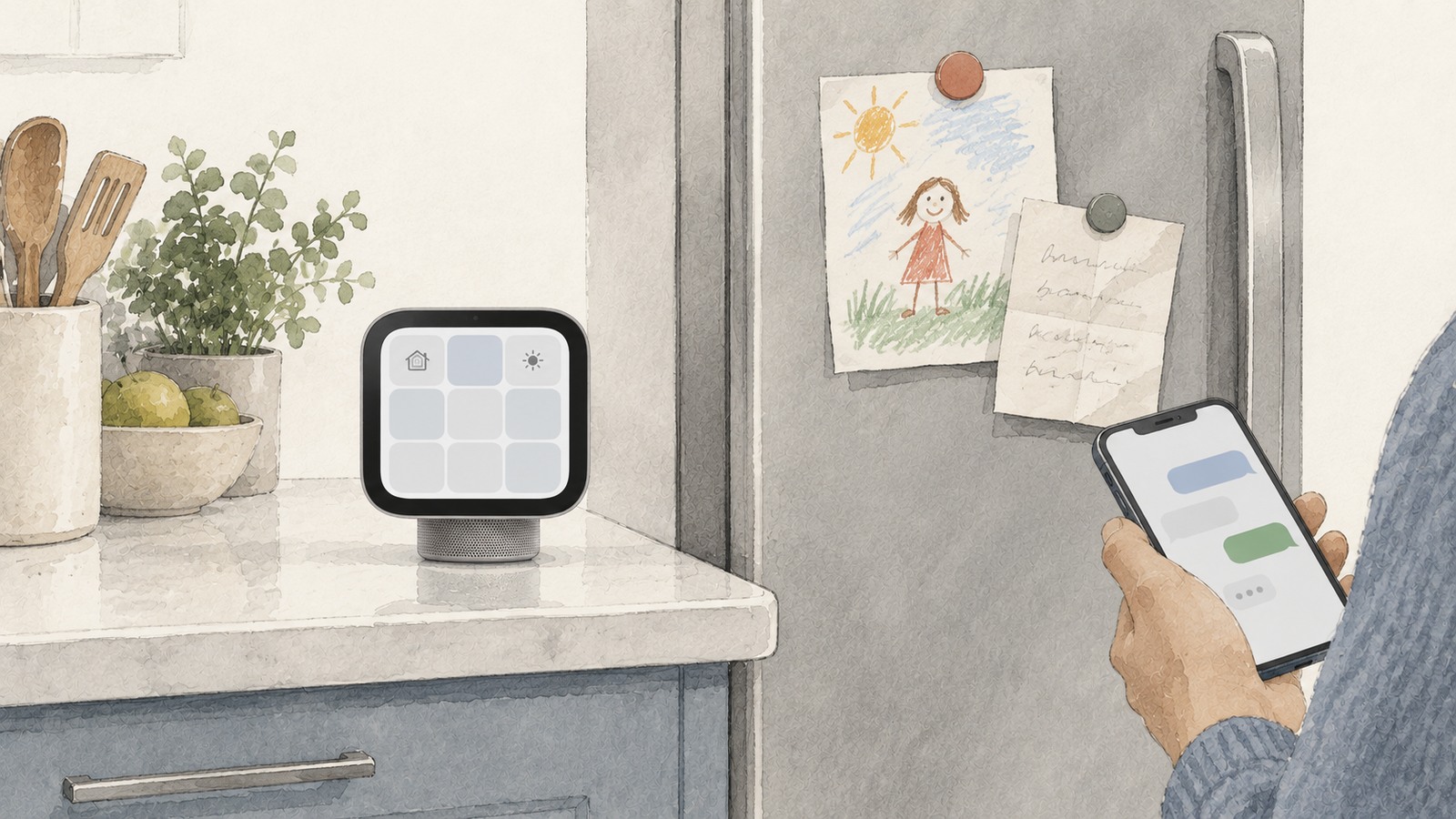
What remains on the fridge is often a child’s drawing, or a handwritten “Come home early.” There’s information in that note, certainly. But what matters is no longer just the message. It’s who wrote it and how. The handwriting carries a little anticipation, even a private meaning only the family understands.
Replace it with a tidy calendar reminder and you’ve preserved the instruction while losing the affection. An orderly schedule is useful at work. At home, a note on the fridge may serve quite a different purpose.
So I wonder how much of the job HomeView wants to take over still needs doing. We already use phones for things that need a quick response. The things we’ve left on the fridge aren’t so easily replaced by an electronic noticeboard.
How many families qualify?
Even for a family that wants a shared screen, there’s considerable work ahead.
Someone has to connect calendars scattered across different services. The home needs enough HomeKit-compatible devices for the control panel to earn its place. Family members need to be using the sharing and collaboration features of their Apple accounts. Everyone owning an iPhone doesn’t come close.
Yes, Google Calendar can connect to Apple’s calendar, and school or work calendars may offer subscriptions. But being able to connect them is different from anyone actually doing it. One person has to work through the settings, bring everything together, and maintain it when something breaks. Everyone else has to put their plans in a calendar instead of casually mentioning them in the group chat.
For plenty of people, “My calendar isn’t with Apple” will be enough to end the conversation. Getting real use out of HomeView demands a lot.

Each requirement eliminates another group of buyers. You’re left with a small number of households that meet all of them. And Apple’s own calendar, sharing, and collaboration features have never been particularly good. Some are simply awkward to use. Apple keeps invoking privacy to justify leaving strange bits of its software unfixed. Joining those awkward experiences together in a new product gives me little reason for confidence.
Of course, HomeView can still be a photo frame, a speaker, or a timer. But if that’s most of what you’ll use it for, why buy it? Echo Show has already offered household recognition and distance-sensitive interfaces, with cheaper models available. The family experience Apple is selling depends on several conditions being met at once. Every missing condition removes another reason to buy. After enough compromises, there may be hardly any buyers left.
Privacy now has a place on the counter
Apple has put considerable work into privacy. Camera and microphone data stay in an isolated area that even Apple cannot access. Recognizing your face isn’t enough to display private information: a paired iPhone or iPad must also be present and have been unlocked recently.
I don’t doubt the engineering. I believe Apple can deliver those protections. But technical shortcomings aren’t necessarily what make people uneasy.

There’s a camera on the kitchen counter, facing everyone who comes and goes. There’s a shared screen that can call up your messages, appointments, and reminders. Knowing the safeguards doesn’t make that entirely comfortable. Apple’s handling of data used to happen inside systems you couldn’t see. For most people, that made it easy to ignore. Now a device that recognizes you and displays your private information sits in front of the whole family. Privacy has become something you have to look at.
That discomfort is subjective, but it’s real, and it affects whether people want to use the product. Apple can’t assume that rigorous protections under the surface will automatically make everyone feel secure. The design has to address the feeling of being watched, with reassurance people can actually see.
AI is its one convincing reason to exist
The more I think about it, the only convincing possibility is a sufficiently capable AI behind the screen, one that can actually handle things for a family.
Then HomeView would make sense as a way to talk to a household AI, rather than as a noticeboard. You wouldn’t need to get your life organized before using it. Calendars could remain scattered across services; plans could keep changing. Tell it what you need, and it finds the information and helps coordinate things. That’s where I see promise.
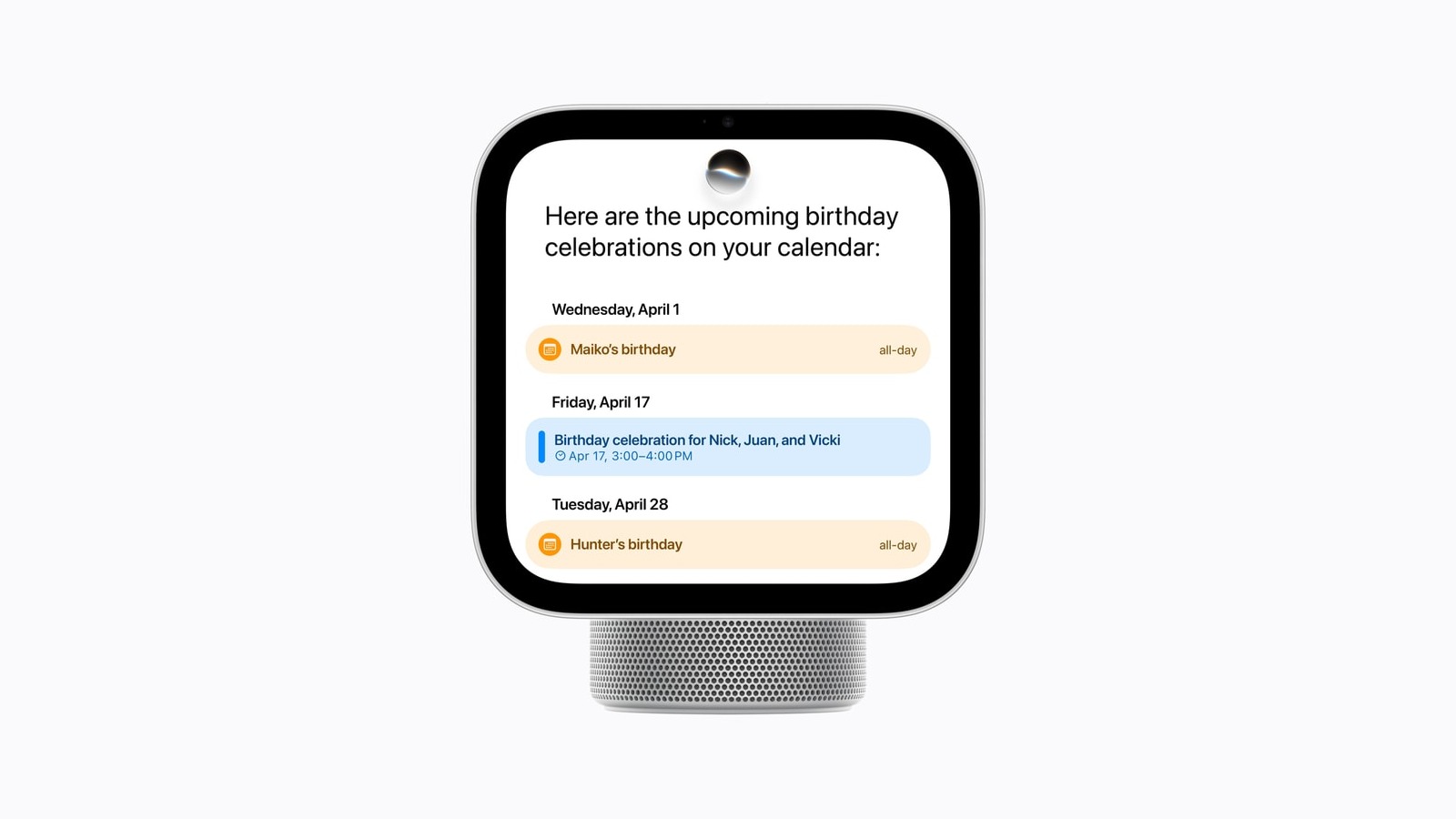
Can Apple’s AI do that? Siri AI is already part of HomeView, and Apple’s demonstrations show it working across apps and understanding personal information. But how far is it from an assistant that can chat and check appointments to one that can help run a household? We don’t have an answer yet. As of today, I don’t think Apple has the ability to deliver what that would require.
Apple has never been especially good at software services. Will it build the necessary AI itself or use someone else’s? How much access will outside services get? HomeView doesn’t even have an App Store. You can’t freely install apps as you would on an iPad.
My impression is that Apple itself is undecided. It wants this device to do a great deal, but seems yet to settle how much its own AI will handle, how much it will borrow, or how many outside services it will let in.
If AI can help a family whose life is messy, I’m interested. If the family still has to organize its life into a form the machine understands before it can help, this will fail.
A home that exists in a designer’s head
The household HomeView’s designers imagine is orderly and sensible. Everyone enters appointments on time. Someone keeps track of everything. Devices and accounts are all properly configured. Such households exist. I just wonder how many there are.
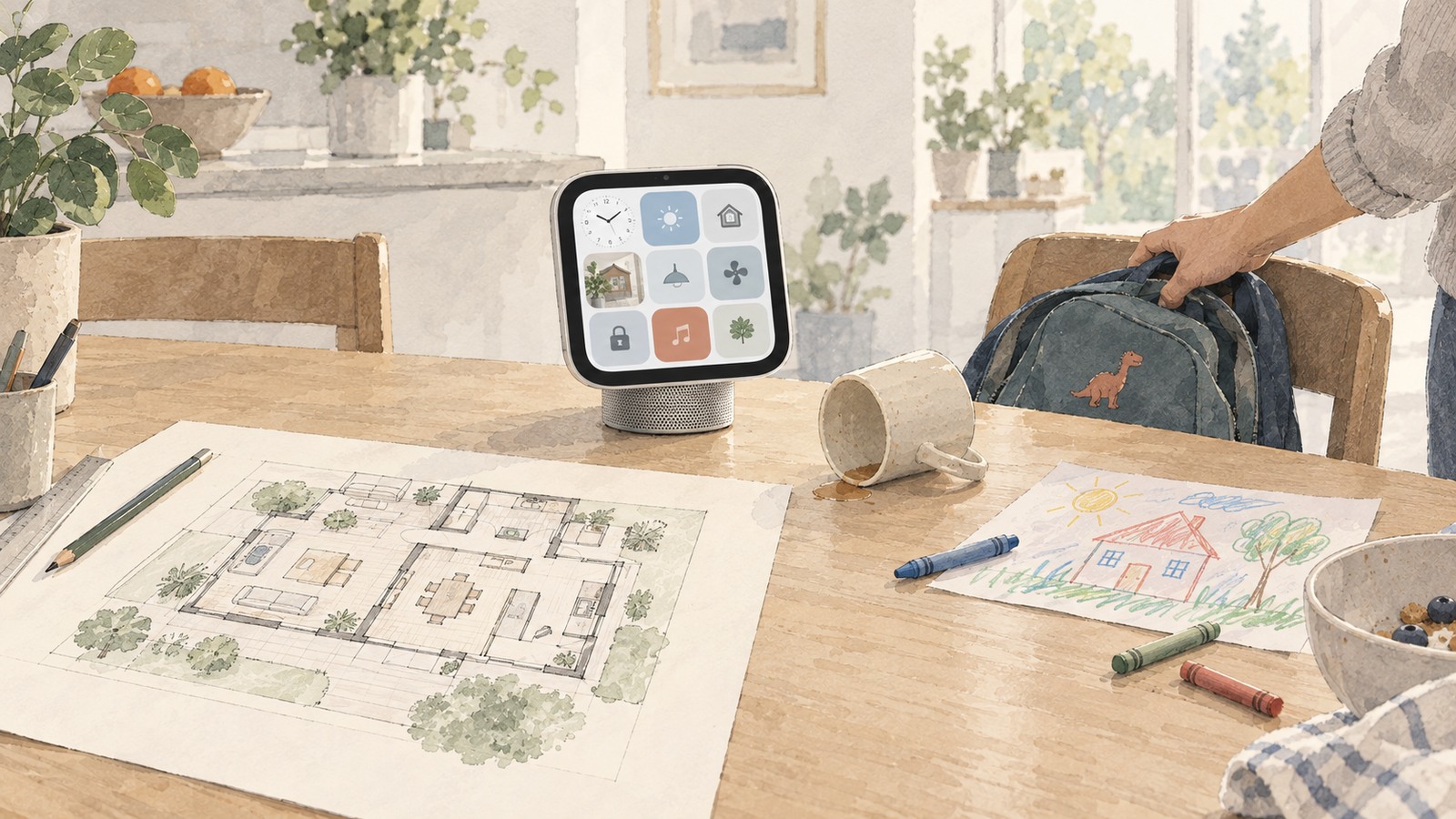
It reminds me of AI gadgets that promise to help us learn and discover the world. We know learning is good. We know getting organized is good. But knowing how we ought to live doesn’t make us live that way. A need that sounds entirely reasonable doesn’t necessarily turn into something most people will use. HomeView feels like a product invented from a designer’s idea of family life, rather than one prompted by how families actually live.
Someone will point out that Steve Jobs relied on imagination too. People who had never seen an iPhone couldn’t tell him what it should look like. That’s true. I don’t believe design should be restricted to meeting needs people already know how to describe.
But if you imagine a new way of living, you need the ability to make people want to adopt it. Apple once did that, which is why we remember Jobs. Looking at this screen, I can picture the life in the demonstration. I struggle to picture my own family living by its script.
Jobs did build products from his imagination. With HomeView, today’s Apple may not have the same gift.