What Is This Image Supposed to Prove?
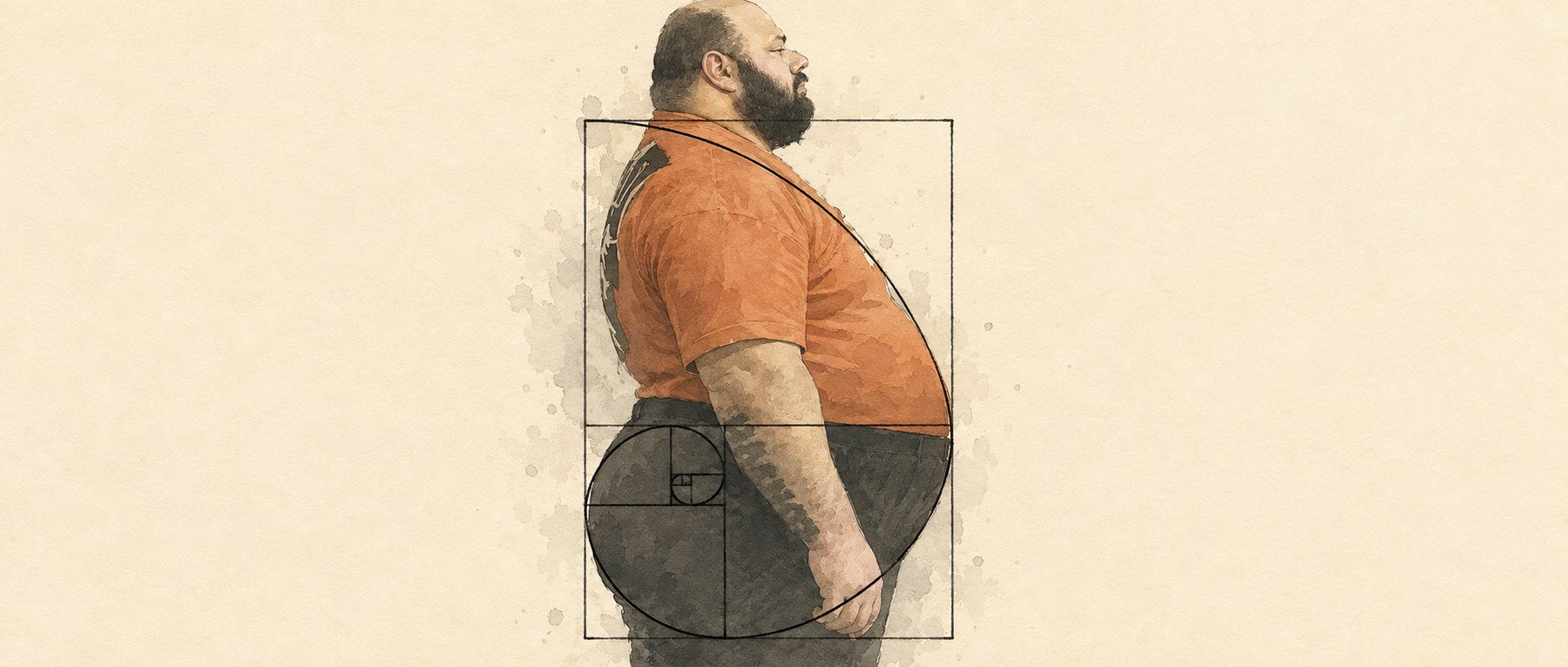
I recently came across an image that had people arguing in the comments. Some said the golden spiral was a fraud. Others said that fitting a golden spiral clearly did not make everything beautiful. Both reactions reveal the same confusion about beauty.
The image makes a simple case. The golden ratio is supposed to be beautiful. This body fits the ratio. You obviously do not find this body beautiful. Therefore the golden ratio is aesthetic snake oil.
It feels like a devastating rebuttal. No theory required. One glance at the photograph and you can congratulate yourself for seeing through a century-old scam.
But the argument only works if the body in the picture is simply, objectively ugly. When we call a body unattractive, are we really saying that no beautiful relationship exists between its proportions, contours and mass?
Forget for a moment whether the spiral has been placed accurately. Give the image its premise: the body does conform to the golden ratio. The interesting question is why something can possess a beautiful underlying structure and still be judged ugly.
There is no contradiction. The image has collapsed two different kinds of judgment into one.
When We Say “Beautiful,” We Often Mean “I Want That”
We rarely look at a body as a collection of contours. We read health, strength and vitality into it. We also ask, usually without noticing, whether we would want that body for ourselves.
Some people look at the figure in the image and immediately think of poor health, restricted movement or an undesirable way of life. Those associations settle the verdict before the eye has spent any time with the proportions or lines.
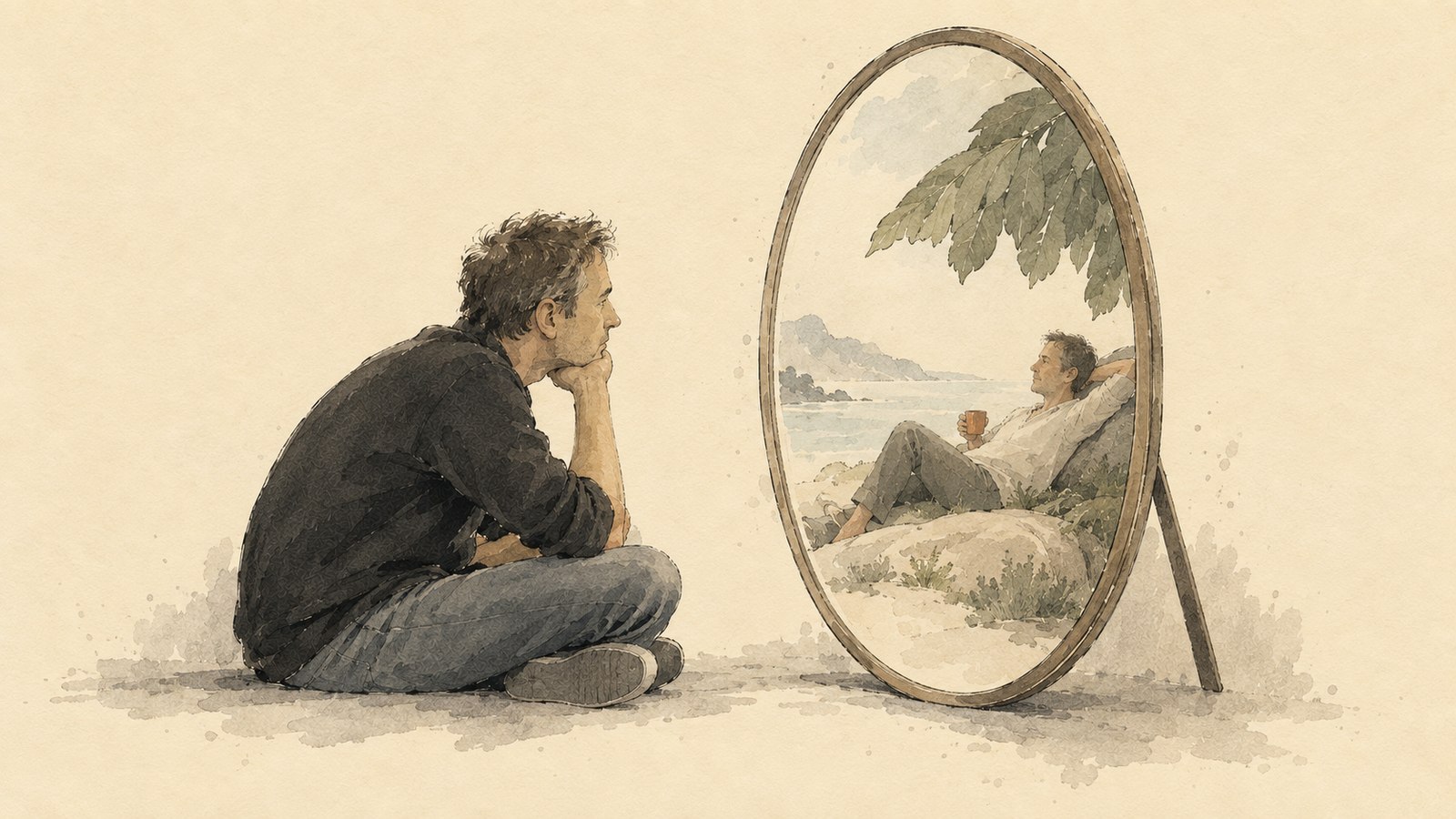
Everyday beauty is tied closely to aspiration. An image that suggests a state we want is easy to call beautiful. An image that suggests a state we fear is easy to reject as ugly.
Self-interest is already in the room. We want health, so signs of health receive our approval. We fear disease, so its signs provoke disgust. We do not stand outside the world with a perfectly neutral ruler and score everything we see.
When someone says, “I think this body is ugly,” they may also be saying, “This is not a body I want.”
That is a valid personal judgment. It does not answer the separate question of whether the body’s lines contain relationships worth seeing.
Beauty Does Not Need Your Approval
By objective beauty, I mean the structure and order inside a thing. They do not appear when we like the thing or vanish when we dislike it.
Take a piece of moldy food. You would throw it away. But imagine seeing its colonies through a microscope before anyone tells you what they are. The shapes, textures and colors might strike you as beautiful. Then someone says, “That is mold,” and admiration gives way to disgust.
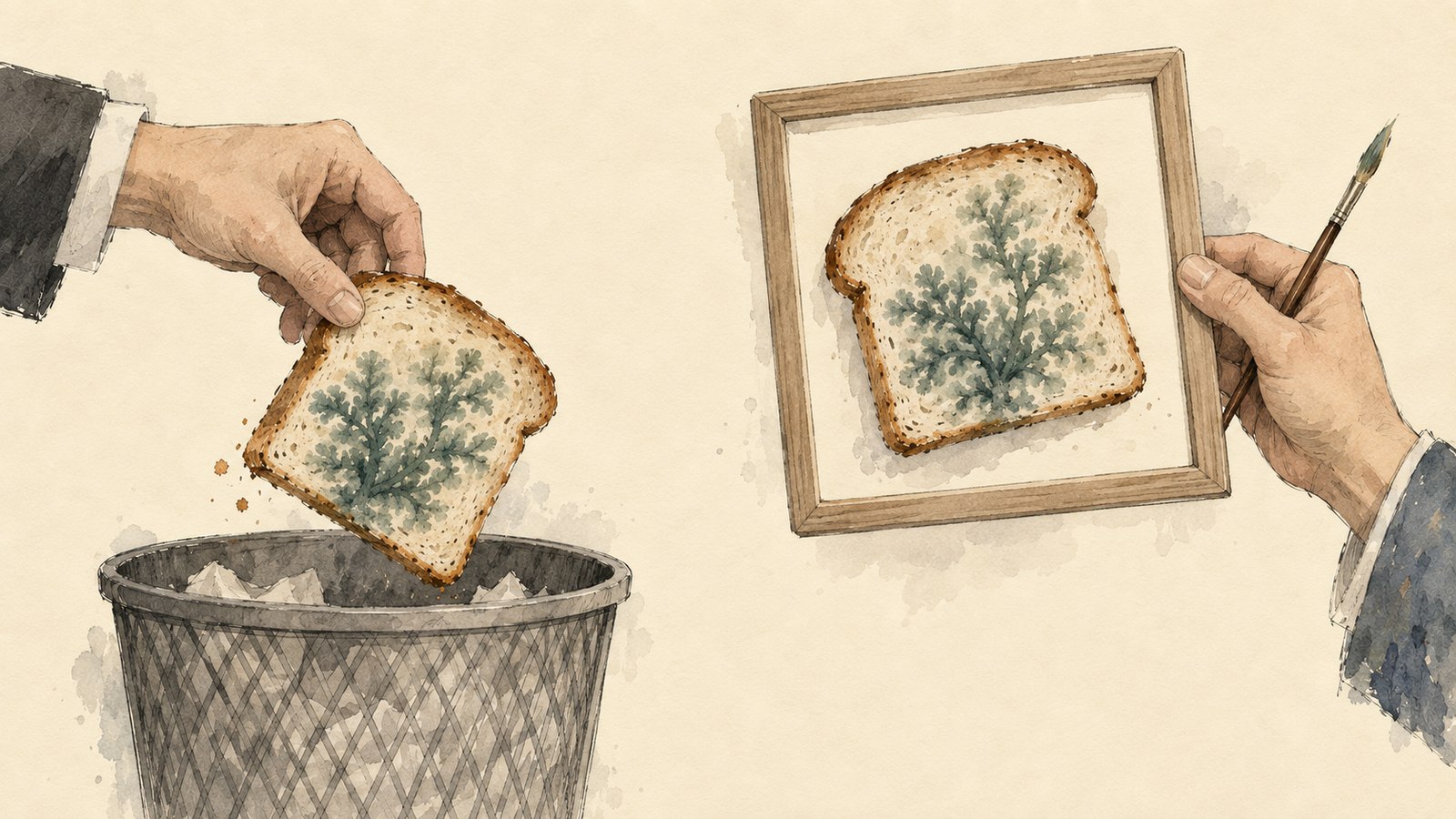
The mold did not change. Your knowledge of it did, along with your sense of what it might do to you.
You have excellent reasons not to eat it. Those reasons do not prove that the patterns you admired a moment earlier were ugly. The organism can disgust you and still contain beautiful forms.
Much of what people call beauty has already passed through this filter. The world offers all kinds of structures and orders. We select the ones that serve our interests or resemble our aspirations, then grant them the title of beauty. The forms we reject do not lose their aesthetic value because they failed our personal screening test.
Popular dislike is not the same thing as objective ugliness.
That still leaves a harder question. Why should a structure such as the golden ratio deserve to be called beautiful at all?
The Golden Ratio Is Beauty as Efficiency
My answer is that, at its deepest level, beauty is connected to efficiency.
Efficiency here means the way a structure organizes space, uses resources and produces complex, stable order from simple relationships. The golden ratio and the Fibonacci sequence offer a clear entrance into that kind of beauty.
In the Fibonacci sequence, each number is the sum of the previous two: 1, 2, 3, 5, 8, 13 and so on. As the sequence continues, the ratio between neighboring numbers approaches the golden ratio. The sequence and the proportion are not two unrelated pieces of aesthetic folklore. They are mathematically connected.
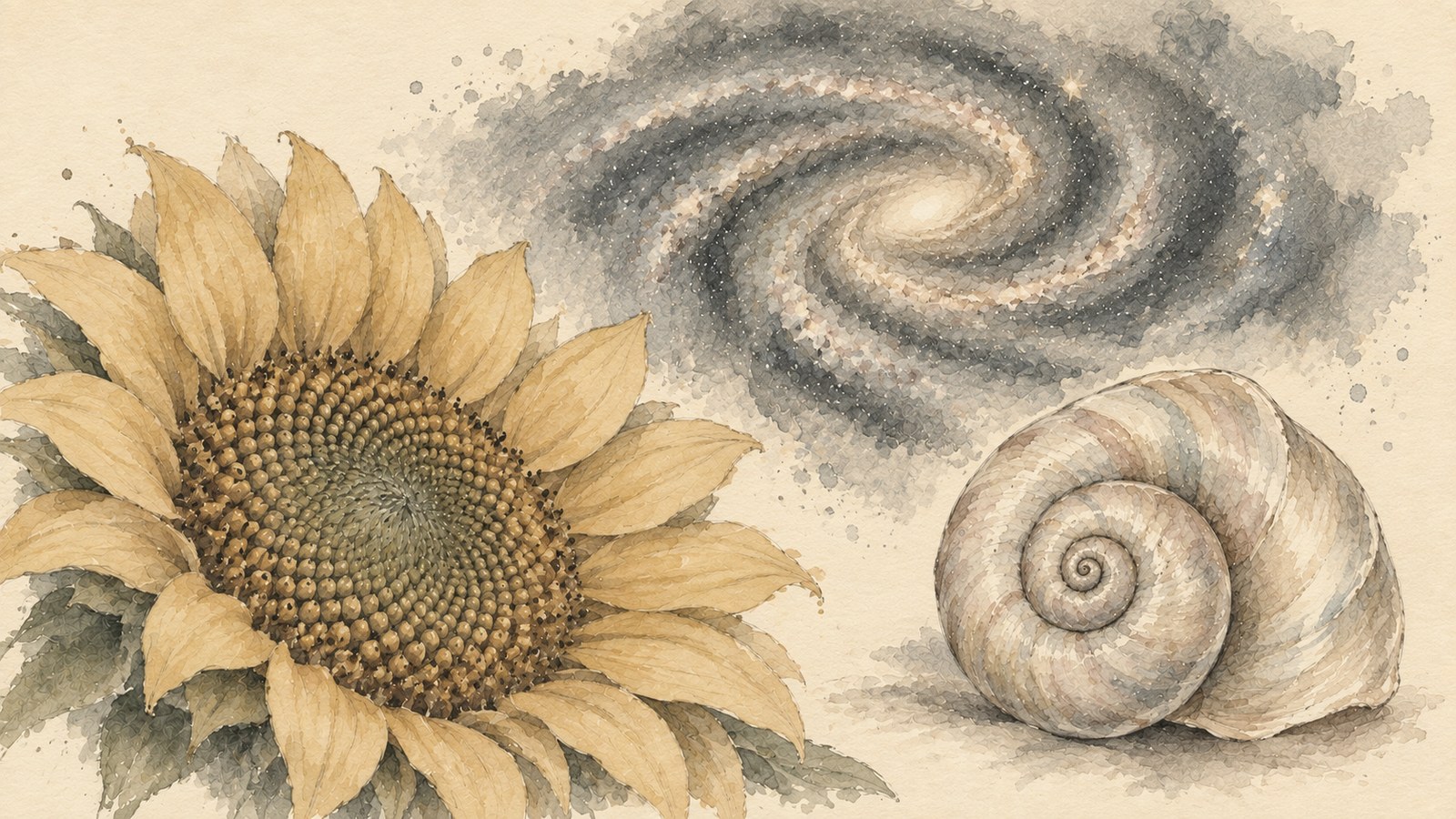
More interestingly, related patterns keep appearing in nature.
Consider the arrangement of leaves around a stem. Each leaf needs sunlight, but each can also block the next one. Their placement is a problem of space and resources. In certain models, the familiar spiral arrangement gives the plant exceptionally efficient access to light. Sunflower seeds use a related packing pattern to fit an enormous number of seeds into a limited area. Shells and galaxies form spirals too. These shapes are not all strict golden spirals, but their resemblance points us toward the same question: what kind of form lets a system grow, distribute matter and use space efficiently?
That is what matters in these examples. The proportion is not decoration. A form that looks simple may be doing several jobs at once.
This is why I place the golden ratio near the foundations of beauty. Its importance is larger than deciding where a designer should draw a line across a page. It expresses a relationship that is both economical and generative.
We have also spent billions of years living among these structures. Our sensitivity to proportion, rhythm and order was not invented from scratch by culture. It was shaped, at least in part, by repeated contact with the forms of nature. Look further out and the same kinds of order appear beyond Earth. Our sense of beauty may carry an education far older than us.
Then human preference gets added on top. Put a spiral in a flower and we praise it. Put one in a fungal colony and we may refuse to look. The difference lies in our reaction, not in the sudden failure of the underlying relationship.
Even if the body in the opening image follows the golden ratio, it does not have to satisfy every expectation attached to an ideal body. Structural beauty and our feelings about someone’s physical condition were never obliged to agree.
Do Artists Have Better Taste?
One of an artist’s essential abilities is to see what ordinary likes and dislikes conceal.
Lucian Freud painted Sue Tilley several times, most famously in Benefits Supervisor Sleeping from 1995. He did not reshape her into a slender ideal. He painted the body’s weight and form without apology.
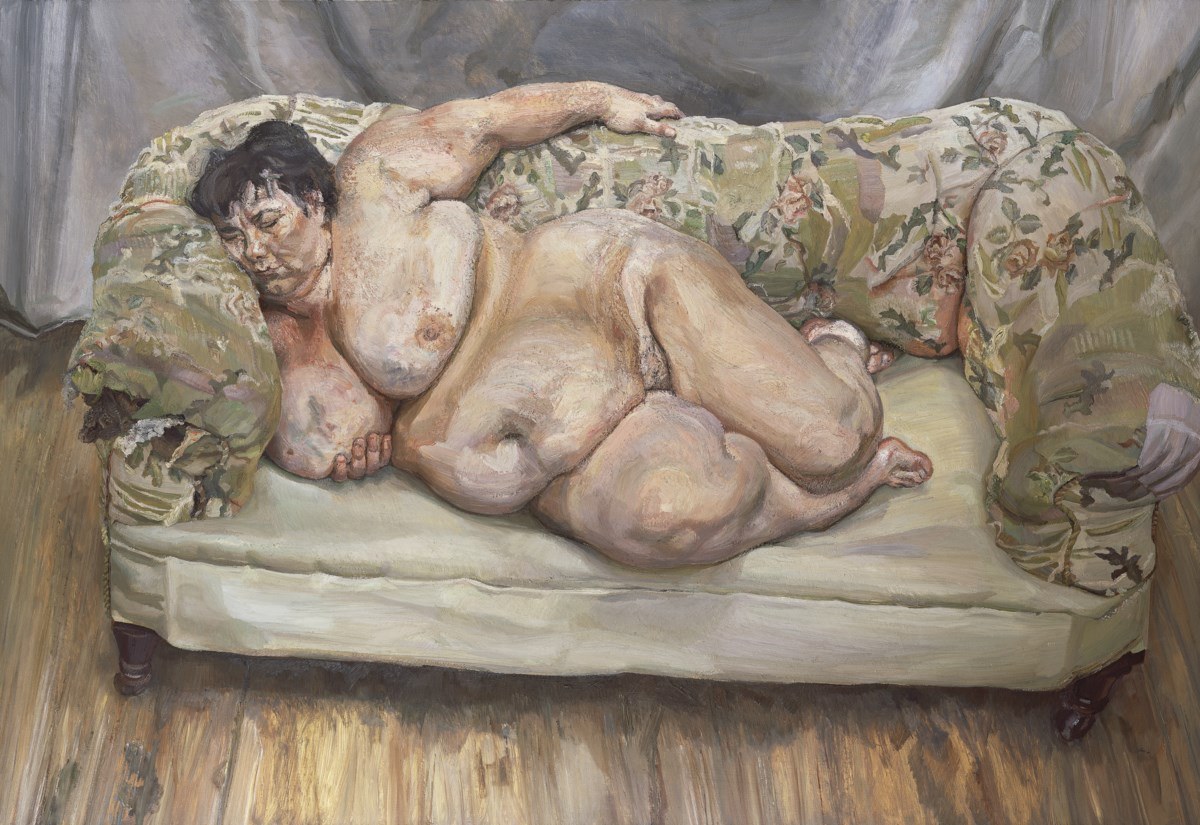
Some viewers see only an unhealthy, overweight body. Others keep looking. They notice how its weight settles into the sofa, how the skin compresses and turns, how light travels over the uneven surface, and how one curve pulls against another.
The first way of looking stops at approval or disgust. The second reaches the relationships inside the subject.
Artists find those relationships, then use the picture to intensify them and make them easier for the rest of us to see. Their choices are subjective, of course. But subjective expression does not mean the beauty itself was invented from nothing. It can direct our attention toward something that was already there.
That does not mean a painting will make you want the body it depicts. You can admire its line, color and volume while having no desire to possess the same body. The two responses can sit together without difficulty.
This is also why aesthetic judgment has depth. A practiced eye can move past its first flash of attraction or revulsion and continue looking for subtler relationships. Seeing them does not require anyone to abandon their choices about how to live. It requires only one admission: what you want is not the full measure of what can be beautiful.
Now the flaw in the opening image is clear.
It uses popular feelings about the body to dismiss a deeper formal principle. It quietly replaces “This is not a body I want” with “This body contains no beauty,” then declares the golden ratio a fraud.
Disliking something does not prove that there is no beauty inside it. And your dislike is not evidence against the principles that beauty rests on.