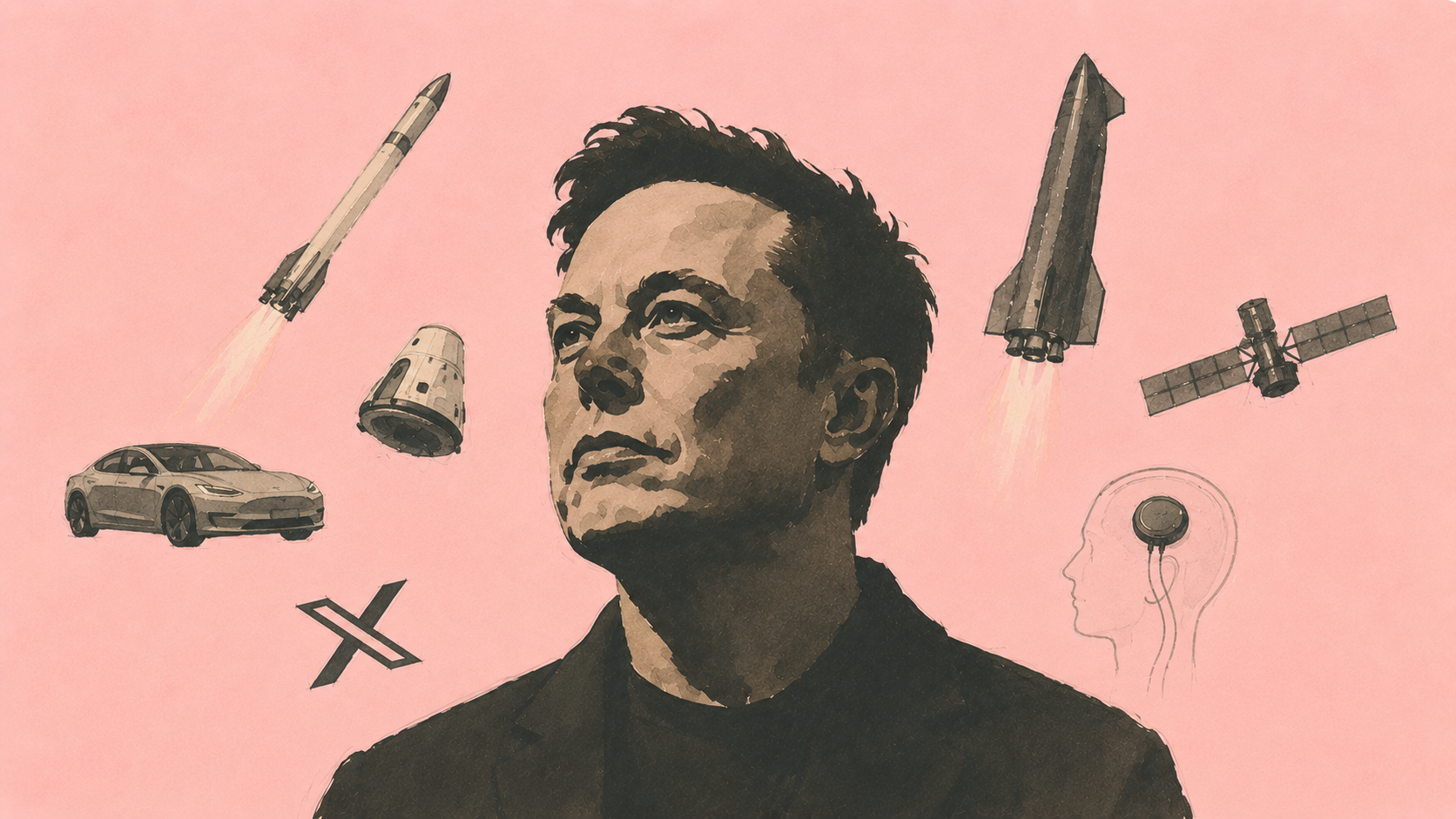
Musk holds some of the hardest companies of this era: Tesla, SpaceX, X, a brain-implant outfit. Line their products up and you spot a single shared mood from across the room — cold, hard, metallic, stripped of nearly all decoration. People have a name for it: bro aesthetic.
The most hated mascot of the whole thing is the Cybertruck. That angular monster welded out of stainless steel splits people clean in half. One side treats it as a totem of the future and pays over sticker to wait in line. The other side says it looks like a trash can, a tape measure, a car a third-grader drew with a ruler.
And he just became the first trillionaire in human history. Not a billionaire — a trillion, with all the zeros. So the obvious question surfaces on its own: with money and power stacked that high, can he just jam his bro aesthetic into everyone’s eyes and make it the look of the next era?
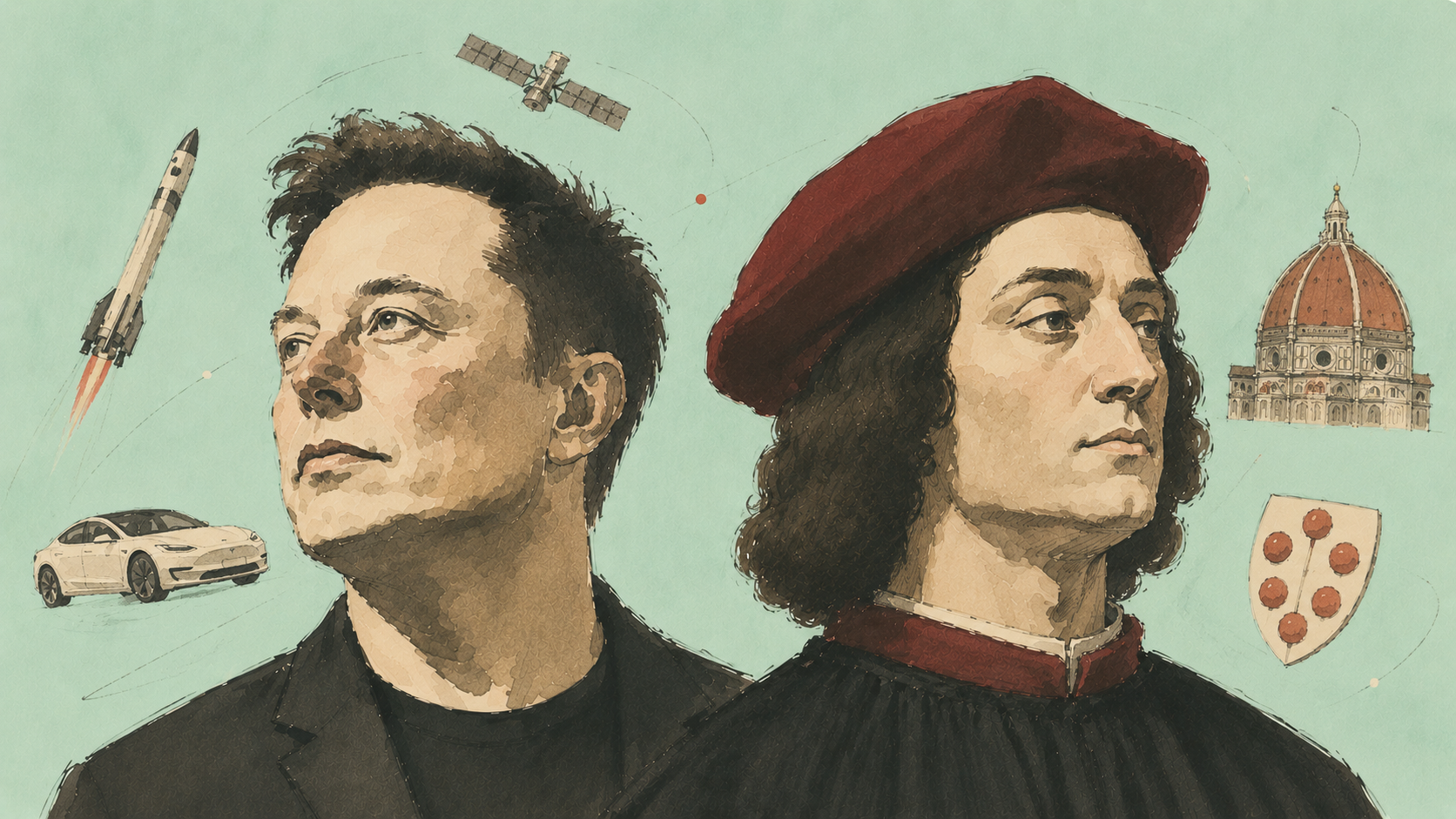
Rich men reshaping an era’s taste isn’t unheard of. Five hundred years ago the Medici, paying in Florentine gold, bankrolled most of the Renaissance. But clear up one misreading first: the Medici didn’t build the Renaissance with money. Florence was already Europe’s center of wealth and learning; their gold fed a fire that was already burning, it didn’t light one from nothing. Money is an amplifier, not an engine.
That’s exactly the crux of the Musk question. His trillion dollars can absolutely shove an aesthetic onto the shelf, push it to the top of the feed, plant it in your line of sight. Whether it becomes beautiful in the next generation’s eyes depends on something money can’t buy.
To see what that is, you have to put down the reflex that he’s bulldozing our taste with his wallet. And step one is admitting an awkward fact: the claim that Musk “has no taste” doesn’t hold up.
Same hands. The Cybertruck gets called a trash can — but his SpaceX spacesuits and the Dragon capsule interior draw open praise: clean, sharp, restrained, like the future lifted straight out of a sci-fi film. A man with genuinely no taste can’t make that second thing.
So the problem isn’t his taste. It’s the question itself. “Is it ugly?” was the wrong question from the start.
Every generation’s idea of beauty is the reflection of a machine
To ask it right, step back to a bigger question. When we judge something beautiful, where does that judgment actually come from? Is it really just personal preference, eye of the beholder, end of story?
My answer makes people pause: beauty was never free-floating personal taste. It’s an era’s worship of whatever holds the most power, abstracted into something you can see.
By “power” I mean one thing: productivity. Not the kind you mean at the office when you say “efficiency” — something larger. The core ability of an age to create value and decide whether a whole people lives well. In ancient Greece it was childbearing. In the industrial age it was manufacturing. Today it’s computation and information. Whichever kind of productivity an era worships most, it learns to see the shape of that productivity as beautiful.
This isn’t a slogan; there’s a line you can trace through it. And note, I’m talking about the mainstream taste of most people in an era, not every niche. Ancient Greece crowned the full-figured Venus because in that age, breeding the next generation efficiently was the hardest productivity there was, and a fertile body was your stake in survival. At the end of the 19th century, just after physics had pinned down electromagnetism and light, just after industry had lit up the whole world, the Impressionists threw themselves at light and shadow within a few decades, painting the fleeting instant. By the Bauhaus, they hauled the factory’s geometry and bare steel pipe straight into the living room — because the sexiest, most powerful thing of that age was industry itself.
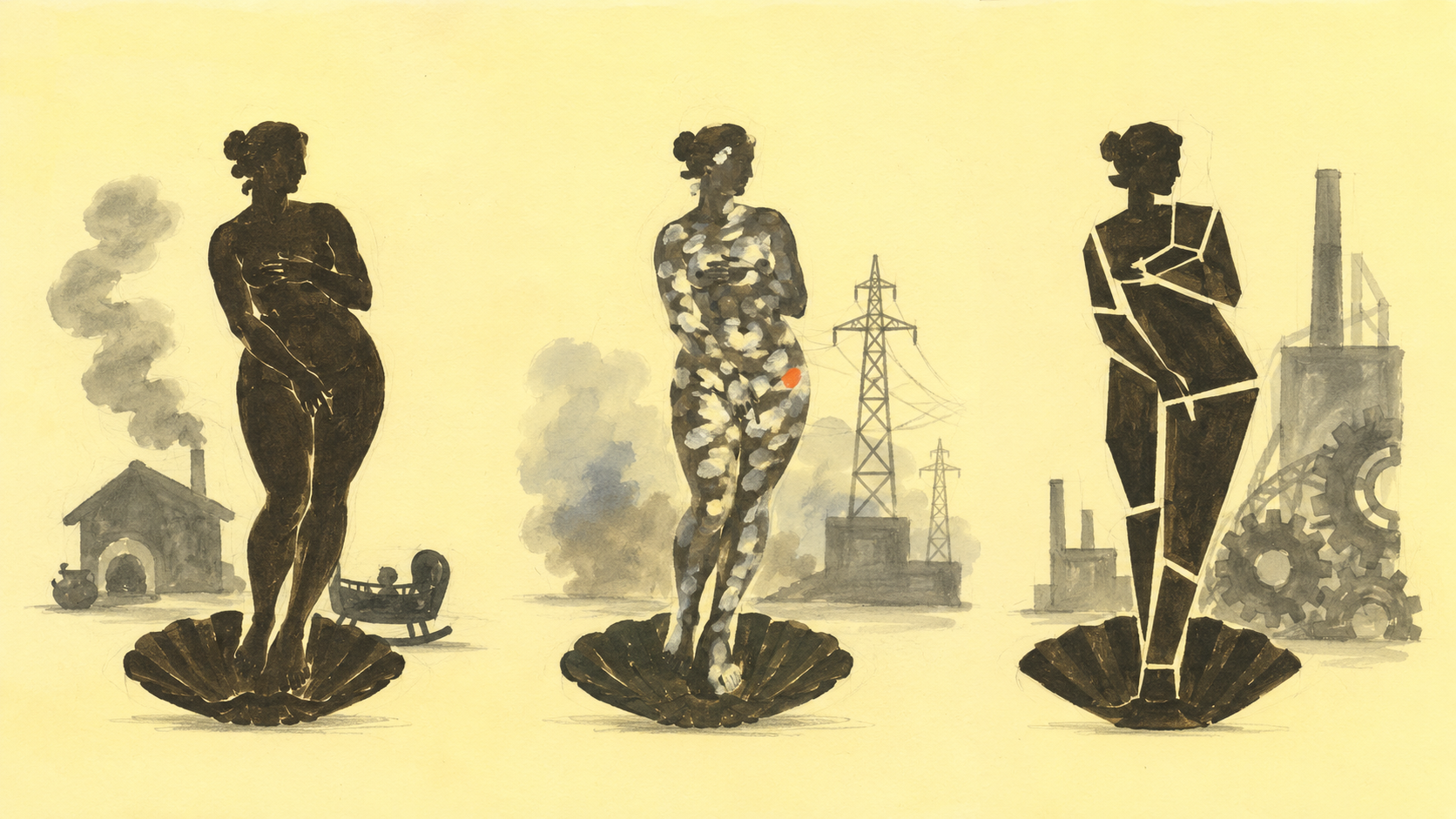
Head off a common misreading here. This isn’t the clumsy claim that physics invented Impressionism. What taste worships is always the image of productivity, never productivity itself. The light in an Impressionist canvas isn’t Maxwell’s equations; the Bauhaus grid isn’t a real factory blueprint. They’re a generation distilling “the most powerful thing in my era” into something you can see, hang on a wall, worship. An image, not a spec sheet.
If those examples feel too far away, look at your own phone. Over the last few years almost every app you touch has gone soft, gone round, gone friendlier. Open ChatGPT or Gemini and you get flowing waveforms, a mysterious purple glow, a gradient that seems to breathe. That’s not some designer’s personal taste happening to collide this year. That’s the machine called information-and-computation projecting its own shape as the beauty of this era. Round, fluid, gentle, easy to approach — that’s its self-portrait.
And here’s the real hinge: an era never runs on just one machine.
So at any given moment you’ll find two aesthetics standing side by side, one soft and one hard. Apple and Google’s ever-more-fluid, round, friendly line is the shadow cast by information-and-computation. Musk’s cold steel, hard edges, exposed mechanism worships a different machine — rockets, heavy industry, manufacturing, the brute industrial force that puts humans on Mars. In its value system, decoration is weakness and waste, so it comes out cold, hard, aggressive, contemptuous of polish by nature.
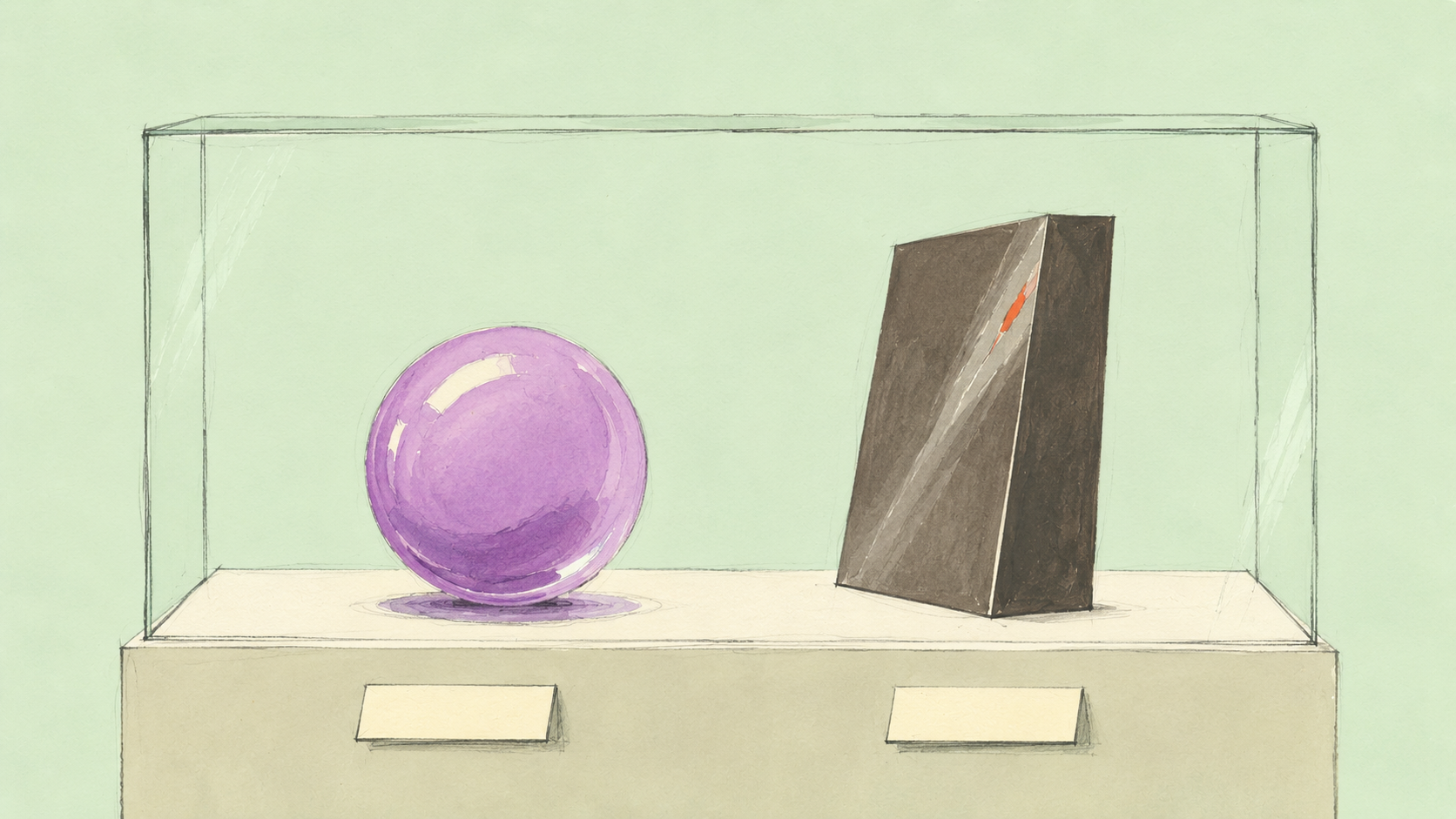
Neither aesthetic is the other’s villain, and neither can swallow the other. They’re just two different machines, each casting its own reflection.
Look at the bro aesthetic again and it stops being “no taste.” What we call ugly is, more precisely, this: we’re still holding the old era’s ruler against a totem that belongs to a different machine. Musk isn’t a man without an aesthetic. He’s the flag-bearer of a different one. And a flag-bearer, before the war is won, always looks like an outsider.
Will the next generation’s taste be the one Musk built?
Run a bold thought experiment. If our era’s taste swings hard, will it tip toward Musk’s bro aesthetic?
How does an outsider aesthetic, one nobody widely accepts, ever turn into the beauty the next generation takes for granted?
Apple and Google’s round, friendly look became “beautiful” without much argument — not because the designers insisted, but because the machine behind it, digital and internet, had already rewritten the world for real. An aesthetic never climbs to the top by volume. It climbs because the machine behind it actually rewrote the world.
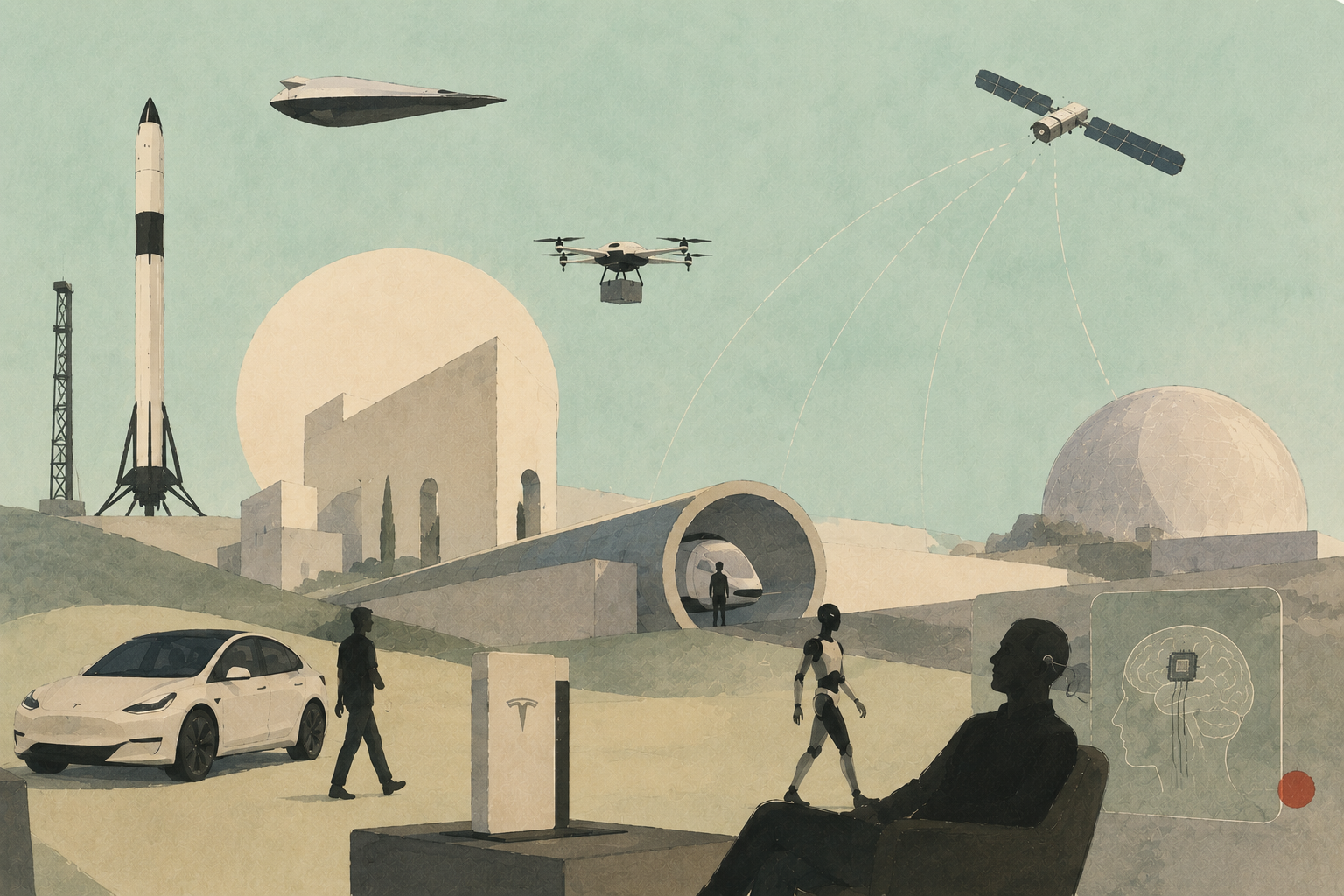
So whether Musk’s hard aesthetic gets handed that same ticket to “beauty” — the answer isn’t in his trillion dollars, isn’t in his follower count, isn’t even in Cybertruck sales. It rides on one thing only: whether the hardcore industrial machine he’s betting on can actually deliver real productivity.
Pull two kinds of “success” apart here. If rockets really land cleanly, again and again; if robots really walk into the factory and work; if manufacturing cost really gets smashed through — then the bro aesthetic is the shadow of a real machine rewriting the world, and like the Bauhaus before it, it will slowly work its way into everyone’s eyes and become the new default, whether you like it or not. But if none of that lands — if it’s market cap and noise and fandom propping the truck up into a status symbol — then it’s just a fad inflated by money and hype, gone the moment the wind shifts, with nothing to do with productivity at all.
You might find it impossible to picture a truckload of cold steel right angles becoming “beautiful” to the public eye. But the violent shifts in taste always looked absurd at the time and obvious only in hindsight. Three hundred years ago Rococo — all that ornate, sugary, gilt-and-silver aristocratic frill — was the very synonym for “refined.” When it got swept out, almost nobody living inside it saw it coming. The eyes we’re looking through today probably can’t predict what the next generation will fall for either.
A bet that hasn’t been called yet
So will Musk’s bro aesthetic become the next trend? This piece isn’t going to hand you a clean answer — there isn’t one to give today. It’s a bet already placed, not yet called.
And the other side of the wager isn’t his money. It’s his rockets and his robots. We’re all crowded around arguing whether it’s ugly or beautiful, but we’re waiting on the same thing: not some designer’s verdict on taste, but the machine’s own answer.
The day a rocket stands clean on the ground and robots lift productivity tenfold — that’s when the answer shows. Until then, calling it beautiful or ugly is both too early. What we’re waiting on isn’t anyone’s eye. It’s the report card that machine will eventually have to turn in.