A movie poster got dragged across the internet for looking AI-made. But a poster was never judged by what made it — only by one thing: does it make you want to watch the film.
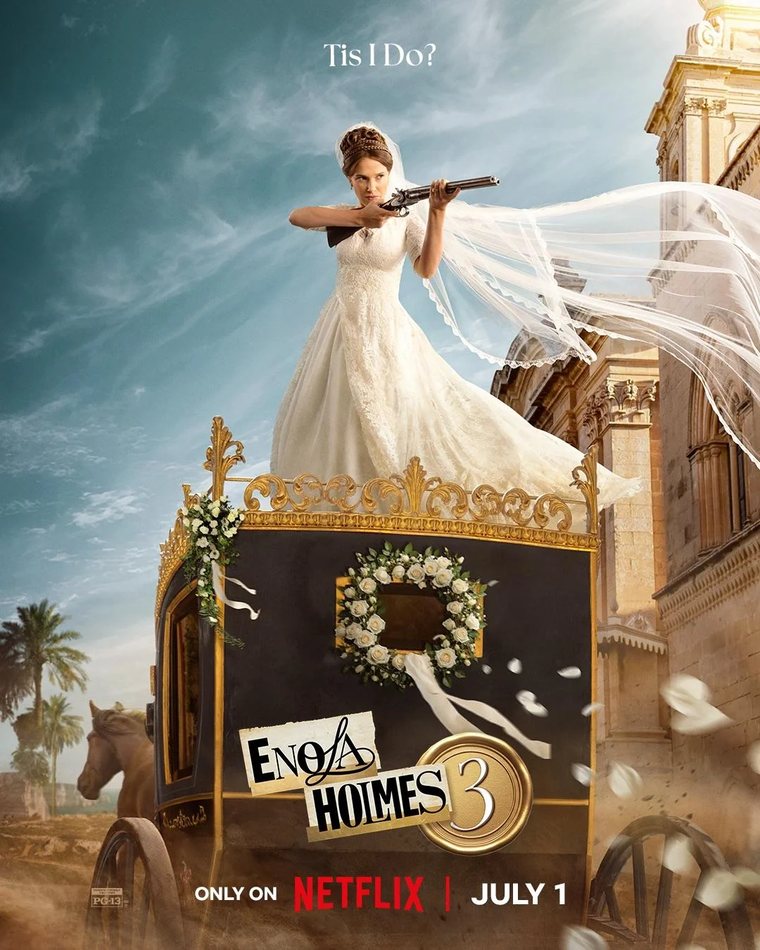
Let me say the obvious part first: the poster is bad. On May 26, Netflix put out the new key art for Enola Holmes 3. Enola in a wedding dress, veil trailing behind her, standing on top of a runaway carriage with a shotgun. Promising image, honestly. Within hours, viewers had taken it apart. The palm tree in the background floats in midair, its trunk connected to nothing. The horse pulling the carriage has no harness — it’s just dragging the thing by force of will. On the church steps, the two doors aren’t even the same door. One reply nailed it: “Netflix can only afford floating palm trees now. And no editor, apparently.”
Is it bad? Yes. Did it ship without anyone giving it a proper look? Almost certainly. But then everyone piled into the same question: was it AI? And that question barely matters.
Nobody could even tell. That’s the tell.
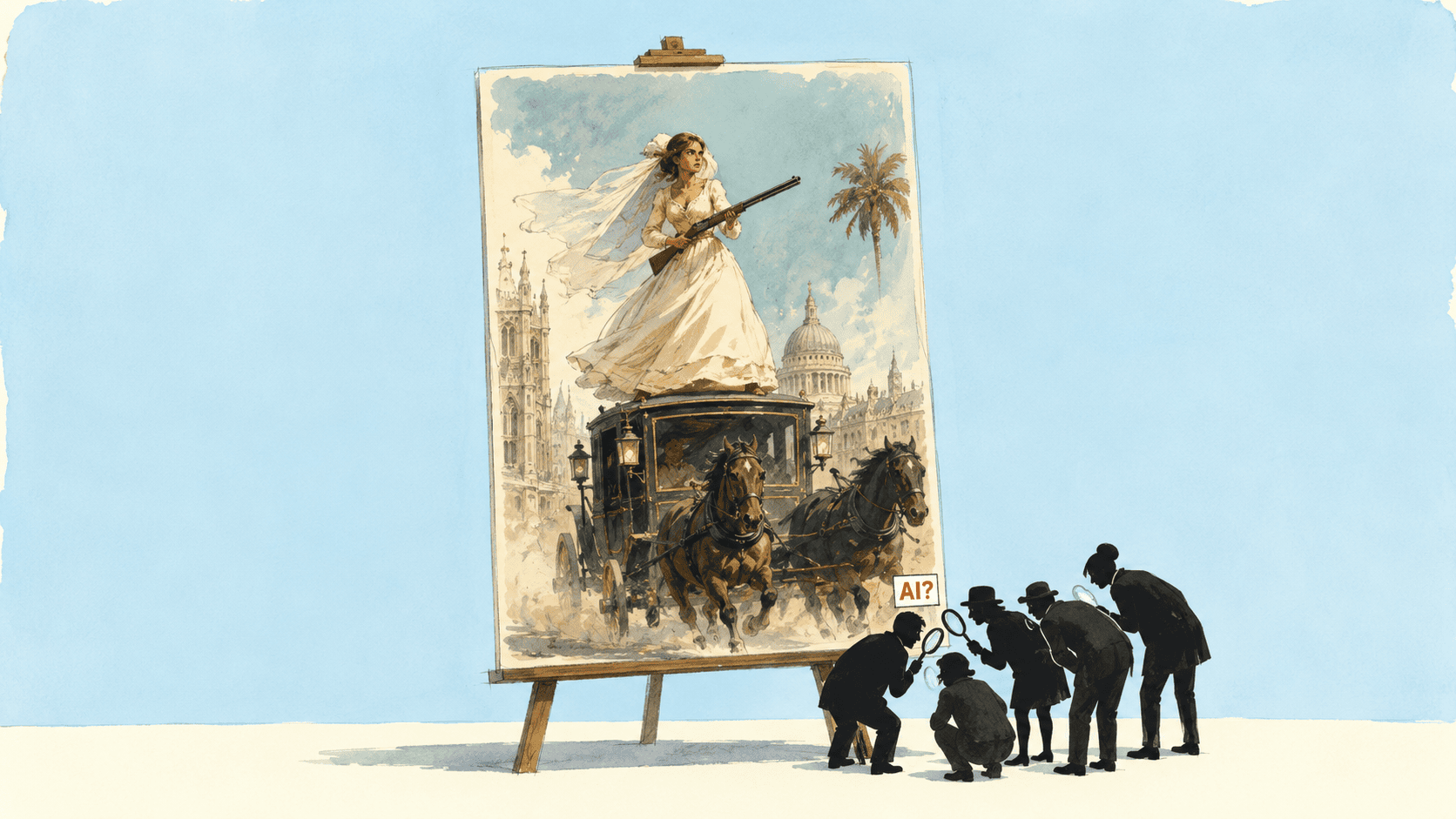
Here’s the funny part: after all the arguing, nobody could say for sure whether AI made it. One camp was certain — the floating tree, the misaligned doors, the warped hands, all the usual fingerprints. The other camp pushed straight back: a human can produce the exact same garbage. Someone added the obvious: bad Photoshop looks just as bad.
Neither side could win. And that’s the point. If you can’t tell whether a machine or a person made it, then “is it AI” probably isn’t what you actually care about. What you can’t stand is the palm tree hanging in the air. And that tree being wrong has nothing to do with whether AI drew it or a person did — hand it to a junior designer and you’d get the same mistake.
So what this poster is missing isn’t “made by human hands.” It’s the check nobody ran before it went out.
What actually makes a movie poster good
What’s a movie poster for? It’s a hook. You glance at it and think, that looks worth watching. It’s a trailer that doesn’t move, and its one job is to hand you the flavor of the film. Whether a poster works comes down to that, most of the time.
But look at where the fight went. All the firepower landed on a different question: AI, or human? People quietly swapped “is this poster any good” for “what was this poster made with.” It’s like complimenting a photographer on a shot and getting back, “guess which camera I used.” A good photo comes from how the photographer saw it, not the brand on the body. The crowd staring at the poster asking “is it AI” has the same blind spot — fixed on the tool, never on whether the thing is any good.
When the show drops on July 1, nobody’s going to watch one fewer episode because the poster was AI-made. What you care about is what it does for you, not which tool built it.
Sneering at AI’s bad hands says more about you
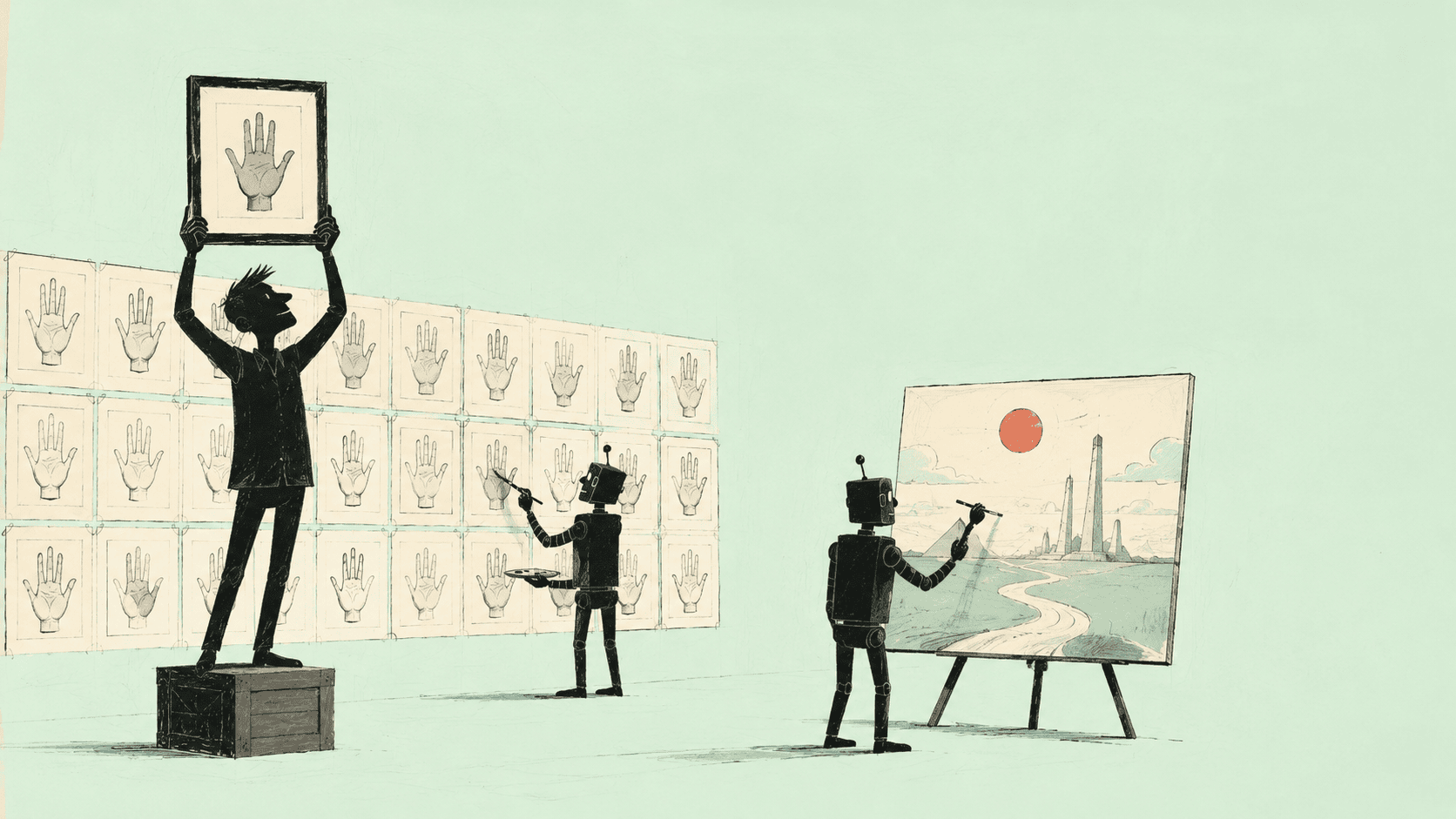
Remember a couple of years ago, when AI gave everyone six fingers, and illustrators lined up to laugh — see, it can’t even draw a hand. A few months later, AI was drawing hands fine. So what did the laughing prove? Nothing.
There’s a logic problem buried in it. When you mock AI for botching hands, the unspoken claim is: I draw hands well, that’s where I beat the machine. But getting hands right is exactly the kind of thing a machine learns fastest. You staked your most valuable skill on something the machine was always going to master — so once it does, what’s left? Drawing accurately is table stakes, sure. If your whole value is “doesn’t get the hands wrong,” that’s thin.
So “a designer using AI is selling out” doesn’t hold. What AI takes over is the grunt work that comes out roughly the same no matter who does it. The idea behind the poster — the hook that makes you want to watch — still comes from the designer. We always wanted the idea, not the designer’s hand on every stroke. When desktop publishing first showed up, people figured a design made on a computer had lost the designer’s touch. Does that opinion hold up now?
The machine can do the hands. It can’t do your judgment. Knowing how to grab a viewer in one look is the designer’s eye, not their hand. This poster went off the rails because that eye wasn’t in the room — not because AI was involved.
We’ve run this argument before
Every time people meet a new tool, they stage this same fight. When photography arrived, painters sneered too: something a machine spits out in one click could never have the soul of a brushstroke. And then? The camera took over the grunt work of making things look real, and painters got pushed forward — into mood, into feeling, into what a photograph couldn’t catch. What got retired was the craft of accurate likeness. What survived was what the painter actually wanted to say.
Machine-made goods went the same way. The first batch goes on display and the old masters pick it apart, piece by piece: this step’s wrong, that detail’s coarser than handwork. Are they right? Often, yes. But what the buyer cares about was never “this is handmade” — it’s whether the thing works. Most watches went to machine production and kept selling, kept getting worn. People who still want a handmade watch exist, but they stopped buying it to tell time long ago; they’re buying status and feeling. Something new shows up, and a crowd makes itself feel relevant by listing the flaws. When the switch is due, it happens anyway. Same this time.
So, back to the poster. Whether AI made it really doesn’t matter. Start to finish, there was only one question worth asking: does it make you want to watch Enola Holmes 3.
The machine will get the hands right eventually, and it’ll set that floating palm tree back on the ground. When it does, the people still clutching “is it AI” will find they protected nothing — because the thing with real value is the eye that spots what’s wrong in one look, never the trick of counting fingers.