
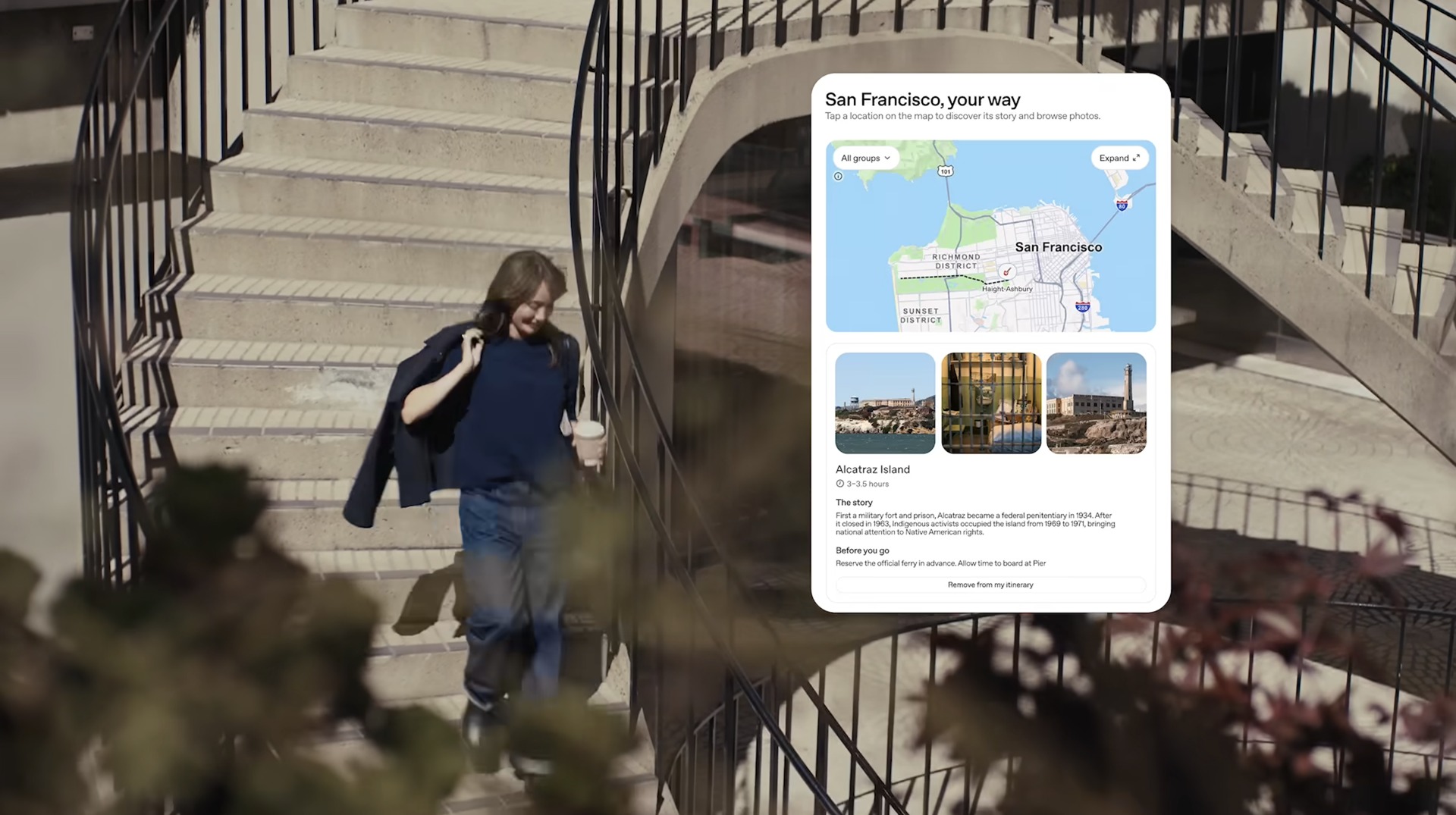
Ask ChatGPT how to prepare a Sunday roast, and it can give you recipes and a cooking schedule you can interact with. Ask about statistics, and it can give you a chart with parameters you can adjust. On October 7, OpenAI introduced Intelligent UI in ChatGPT: an answer can now be a working interface. The official examples also include a bill-splitting tool, a savings calculator, and small games.
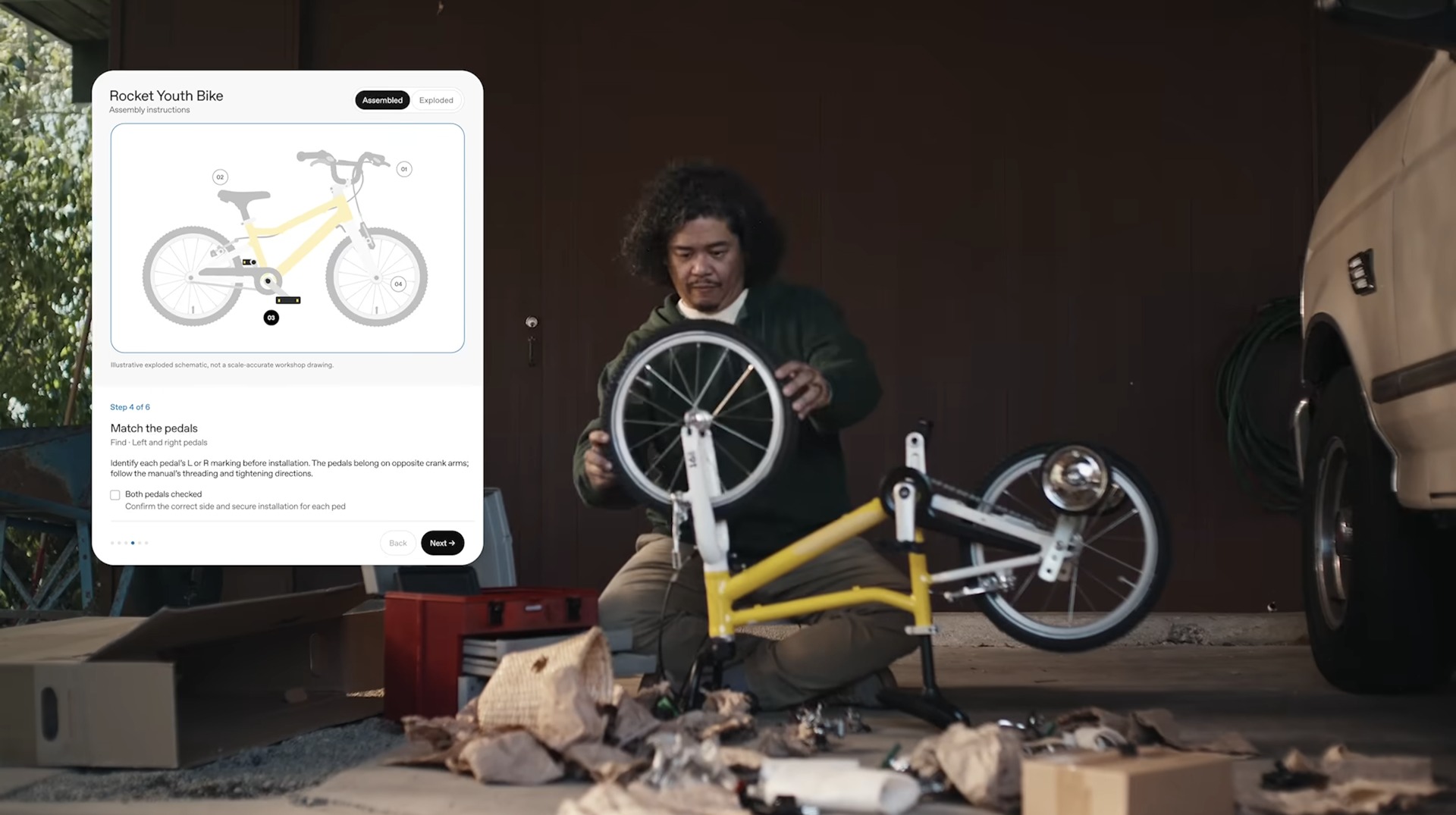
For designers, the significant detail is how OpenAI made this possible. It built a native component library for AI to use and trained the model to design interfaces with it.
The familiar process is roughly this: a user asks for something, a product manager studies the request, a designer proposes a solution, and an engineer builds it. AI can already carry out that whole process for some simple products. As its abilities grow, how we make products, what counts as a product, and what designers do will all change.
These are a few thoughts that follow from that change. Some describe things already happening. Others are guesses, or questions I cannot yet answer. I want to put them in front of people doing this work. This gets fairly abstract in places. It is written for people who have wrestled with these questions on actual projects.
A product with an audience of one
Product design usually begins by deciding who the product is for. A team researches that group, studies how its members behave, identifies what they need in common, and chooses the features. A perfectly reasonable request from a small minority can still get cut.
There is a practical reason: software is expensive to build. A feature that serves only a handful of people will often never pay for itself. Teams have to combine many people’s requests and work with the overlap.
I think of this as lossy compression of human needs. A product keeps what a group shares and discards some of the differences. A limited set of features serves as many people as possible. The economics work, but users have to accommodate the product. If your habits or circumstances fall outside what the team anticipated, adapting is your problem.
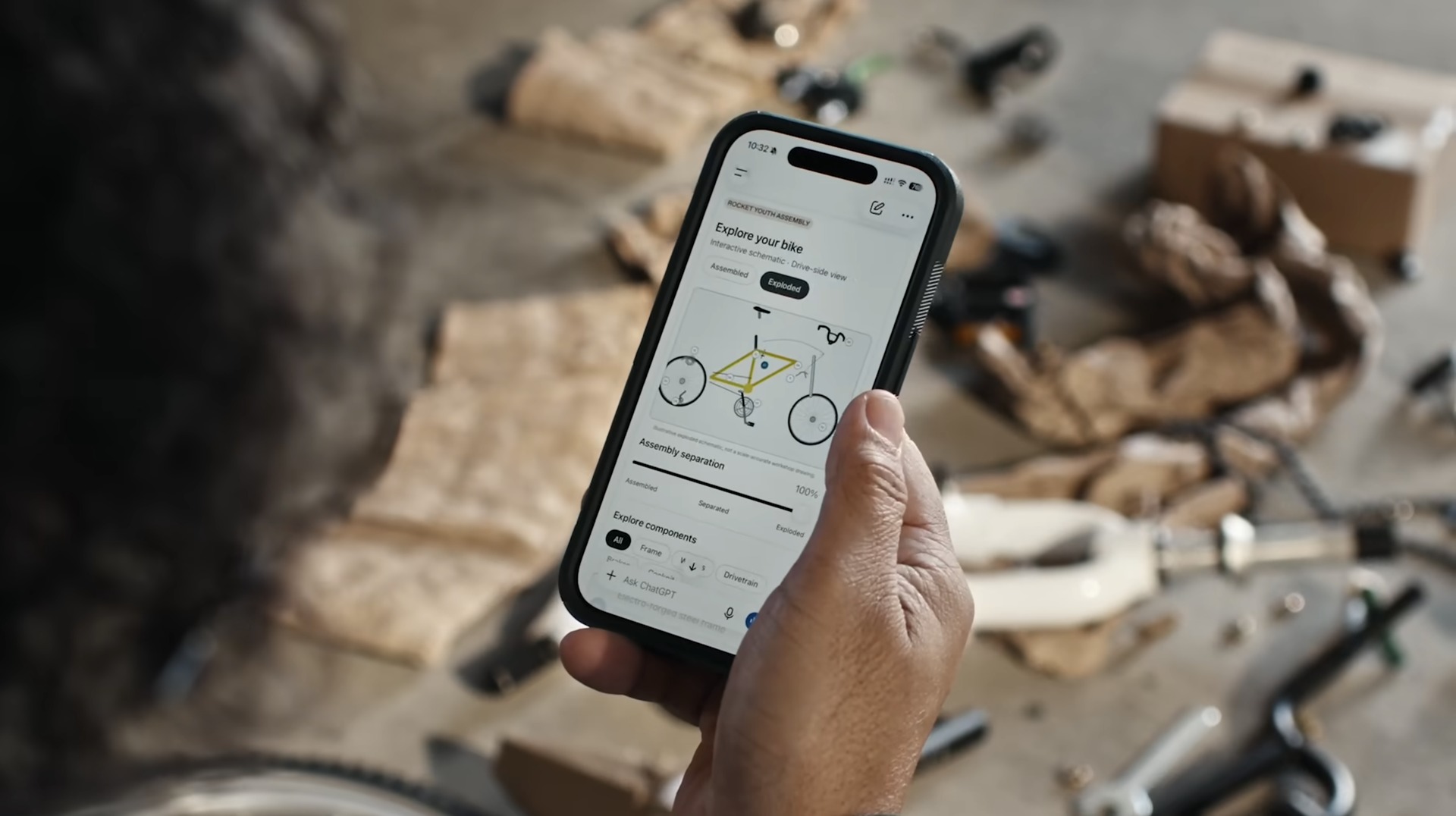
When AI makes production cheaper, fewer of those differences have to be discarded. A problem that only you have can justify its own tool. You no longer need to find thousands of people with the same problem first.
Say you want to plan this week’s dinners around how your family divides the cooking. Building software just for that used to make little sense. You picked an existing app and learned its rules. AI could instead make a tool around yours.
Needs that once had to be left out can now be taken seriously. Serving one person’s particular circumstances stops being a luxury. The uncomfortable part is that it may stop requiring a product team, too. AI could do the whole job.
Made for you does not mean good for you
Imagine someone who wants to read more and asks AI to make a reading app.
At first, he wants a book list and a schedule. Then he sees the first version and asks for reading streaks, statistics, categories for notes, and recommendations. Each addition used to come with a development cost. Now he can get it by asking.
He ends up with a reading system built exactly to his specifications. The screens are tidy. Every feature is there. Every button works. He spends more and more time organizing his list, checking his progress, and maintaining his notes. He reads less.
The product meets his personal requirements and misses his original ambition. Somewhere along the way, “I want to read more” became “I need a better reading system.” Every subsequent improvement went into the system.
Designers know this pattern. A client says, “Make the logo bigger,” when what they want is for people to remember the brand. A request often arrives with a solution already attached. The person making it has not necessarily established that the solution will work.
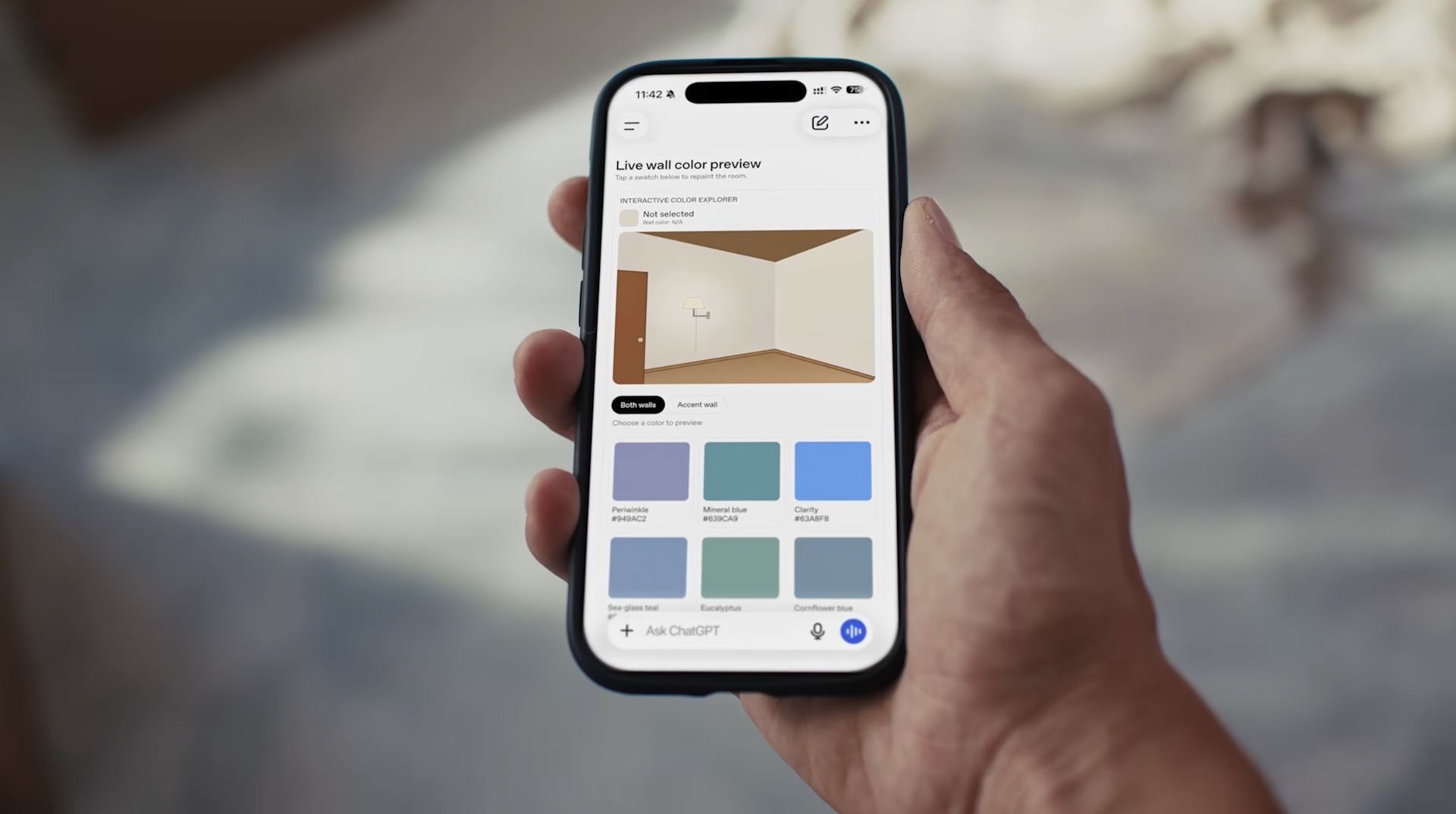
We misunderstand ourselves all the time. Believing that reading matters is different from being willing to set aside time for it every day. People are not usually concealing their real needs. They have not worked out how to solve their own problems.
AI inherits that difficulty when it builds products. Follow every request, keep polishing, and it can produce a beautiful implementation of a bad idea. The more finished it looks, the happier the user becomes, even as the original problem goes unsolved.
What you get out of AI depends heavily on how well you understand the problem. The model can know more than you do. But your questions and your standards for evaluating its answers determine where that knowledge gets used. Keep asking how to improve the reading system, and even a very capable model can spend all its effort on the software instead of the reading.
A good product must do more than satisfy a request. It must improve the situation the user wanted to change.
Customization answers whether we can build something just for you. Deciding whether that thing will actually help you takes a different kind of judgment.
More software, fewer apps to remember
If making a product costs almost nothing, the obvious prediction is an extraordinary abundance of products. Every idea can become software. Everyone could have an entire personal collection of apps.
But the number of products made and the number of products used are different numbers.
Development costs used to constrain supply. Remove that constraint, and another becomes harder to ignore: human time and attention. A day still has twenty-four hours. More software does not make people more willing to discover, learn, and use it.
Even useful products compete with one another. A study tool wants you to keep studying. A fitness tool wants you to keep exercising. A reading tool wants you to read every day. Each request is reasonable on its own. Together, they may not fit into a single life. Generating more plans does not do the work of following them.
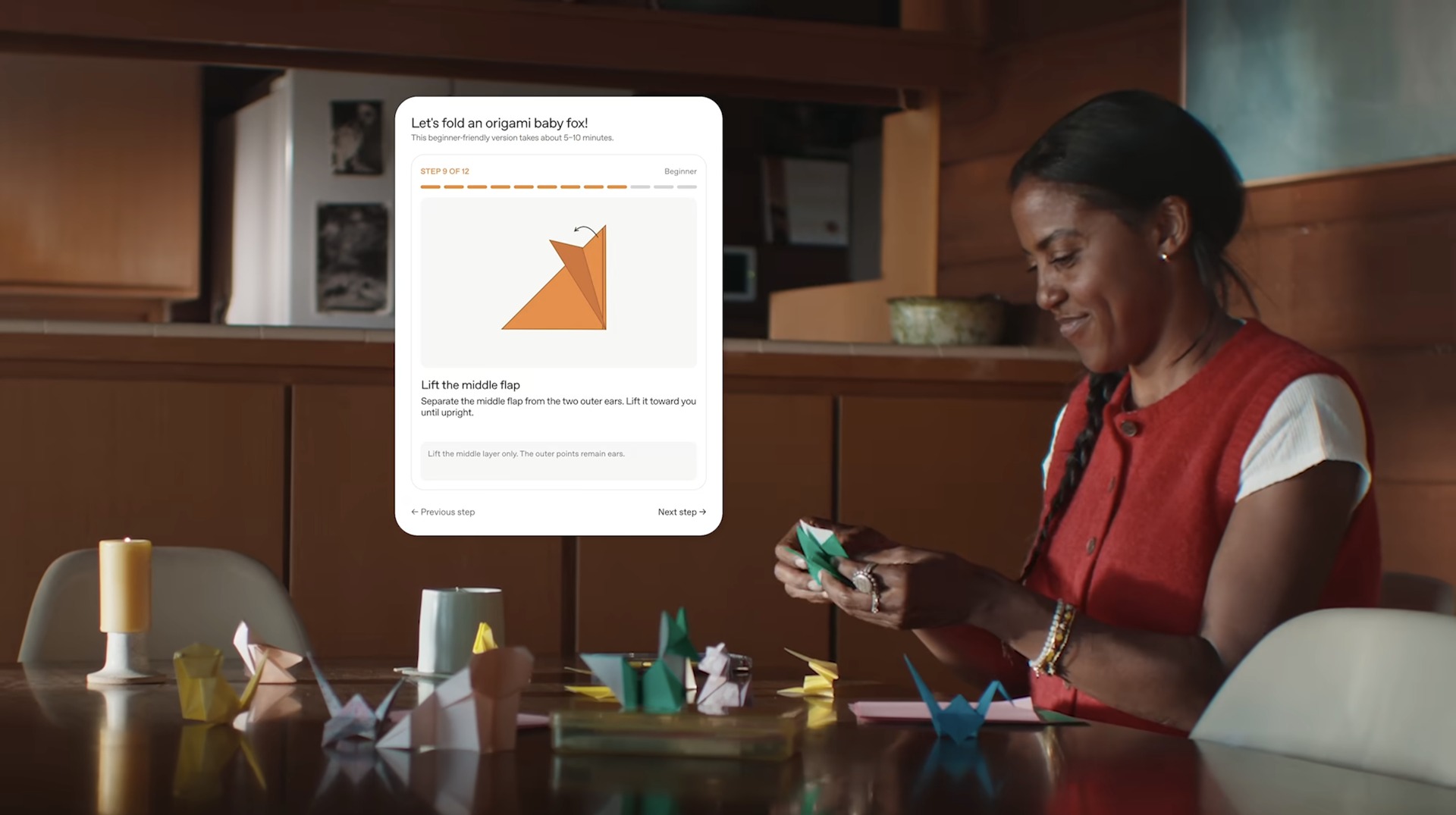
I struggle to imagine a flourishing future as billions of standalone products waiting to be found and used. We can generate enormous numbers of tools. But if using each one still means remembering it, opening it, understanding it, and forming another habit, users will quickly run out of capacity.
That raises a question about the business of making products. Teams used to study a group’s needs, turn them into a product, and try to attract more users. What happens to that approach when making the product is cheap but earning people’s attention remains difficult?
One possibility is that fewer products need a separate place for users to go. You stay with an AI assistant you already know. When you need to split a bill, a bill-splitting interface appears. When you need to calculate something, a calculator appears. Finish the task, and the interface goes away. The services behind it remain, but you have no new app to learn.
That could produce an apparent contradiction: more tools available, fewer products to remember. Custom software for each person need not mean a separate collection of applications to maintain. The same services could present different interfaces at different moments.
Teams would then have to think beyond getting users to open their product. They would need to provide the service when it is needed, without adding another obligation to the user’s day.
This is one possible direction. Which products will become part of an assistant, and which will still deserve to be opened on their own? When an interface can be generated whenever we need it, what will make us choose the same product over time? Those questions are still open.
If AI does the work, where does judgment come from?
It is easy to say that designers will hand execution to AI and take responsibility for judgment. That leaves out how designers acquired their judgment in the first place: by doing the work.
You lay out a page and discover that the information hierarchy you thought was clear will not fit. You draw the entire flow and realize you missed a state. You put a clever interaction in front of a user and discover that they cannot understand it. Those moments stay with you. Over time, they become your experience as a designer.
If learning to design resembles training a model, then attempts, failures, revisions, and feedback from real use are the training data. You acquire more than a handful of reusable lessons. You become sensitive to particular situations. A request comes in, and you sense where it could go wrong before you can fully explain why. There is a resemblance to what we call emergence in a model.
If AI takes over that work, where will a new designer’s training data come from?
An experienced designer can look at an AI proposal and quickly spot its problems. That ability may come directly from having made, broken, and repaired similar things. Someone who has never designed an interface or an interaction may look at the same proposal without knowing what to question.
Seeing many excellent solutions is different from taking an unfinished solution and making it work yourself. The first teaches you what a good result looks like. The second teaches you why it works, what was sacrificed, and what else changes when you adjust one detail.
Future designers do not need to repeat every manual process we went through. Still, I find it hard to believe that someone who has never done the work can develop sound judgment merely by watching AI’s finished designs. Then again, I may be the old designer with a limited imagination, worrying about the new generation just as people once worried that computer-assisted layout would leave designers unable to make a poster unless they had drawn one by hand.
Which steps can we dispense with? Which struggles are necessary to understand design? If the old route to becoming a designer is interrupted, how do we build a new one? Design schools and teams training junior designers will both have to answer that.
Will “designer” still be a job title?
As AI does more of the interface and interaction work, designers may have to begin earlier: deciding which problems deserve attention, and what we want design to do for people’s lives.
That is a much bigger task than writing prompts. Expressing a request clearly and finding a problem worth solving are very different abilities.
Suppose a team wants to work more efficiently. The initial request is for a better task-management interface. A designer can improve its information and controls. Or the designer can keep observing. Why does everyone keep checking what they are supposed to do? Why is everyone busy while the work barely moves? The answer may require changes to responsibilities and decision-making rather than to the software.
The valuable work has already gone beyond the UI. What looked like a missing software feature turns out to be a problem in how people work together. The answer could involve changing the workflow, the organization, or how people communicate.
Designers have no monopoly on that ability. Good engineers question the technical assumptions they inherit. Good entrepreneurs notice unmet needs. Researchers ask questions no one has seriously asked before. Their backgrounds differ, but they are doing related work: noticing a problem, understanding what it is, and finding a way to solve it.
These professions had clear divisions because realizing an idea required different skills and years of training. As AI takes on more of the implementation, people can work beyond the methods they know best. A designer’s answer need not be an interface. An engineer’s idea could involve a service, a physical space, or a change in how people behave.
I expect some professional boundaries to become much harder to draw. Will we still need separate names for designers, engineers, product managers, even entrepreneurs? Could they become versions of the same role: someone who can recognize a problem, understand it, and bring together the means to solve it?
This does not make specialist knowledge less valuable. Deeper knowledge helps you notice problems others miss. What changes is its role. Your specialty may cease to dictate what kind of thing you can deliver and instead become the starting point from which you understand the world and ask questions about it.
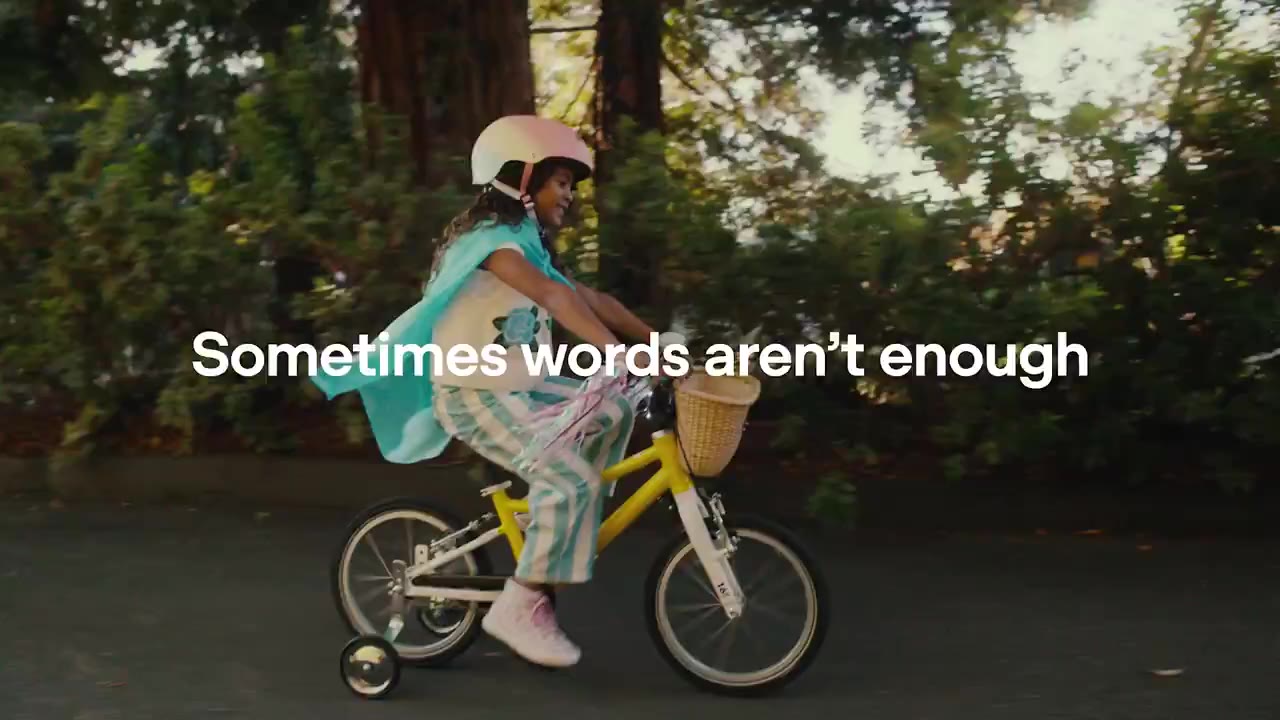
In the promotional film, an interface helps someone assemble a bicycle. Then a child rides it. Begin with the screen, and the design task is to explain the assembly steps. Begin with the child’s life, and you can ask how a child learns to ride, or gains the freedom to go places independently. A different question calls for different knowledge and different ways of acting.
I cannot yet say whether the designer’s job will disappear or merge with other professions. But I expect recognizing problems, asking good questions, and understanding what needs to change to matter more. Designers need to keep developing it, and prepare to work with people trained in other fields.
When AI lets someone readily build any idea they have, will our first question still be “What’s your specialty?” Or will we care more about the problem they have found worth solving?